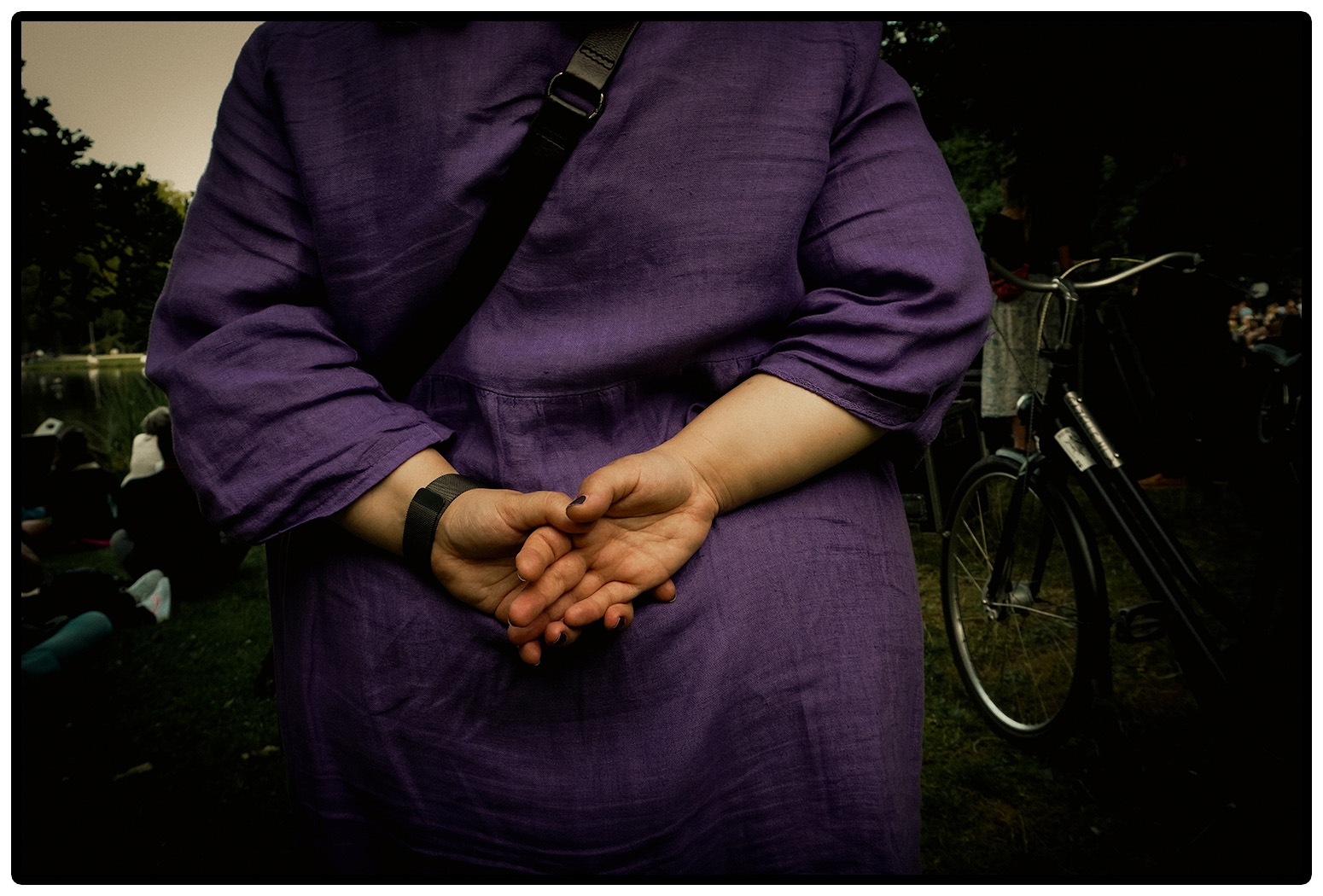
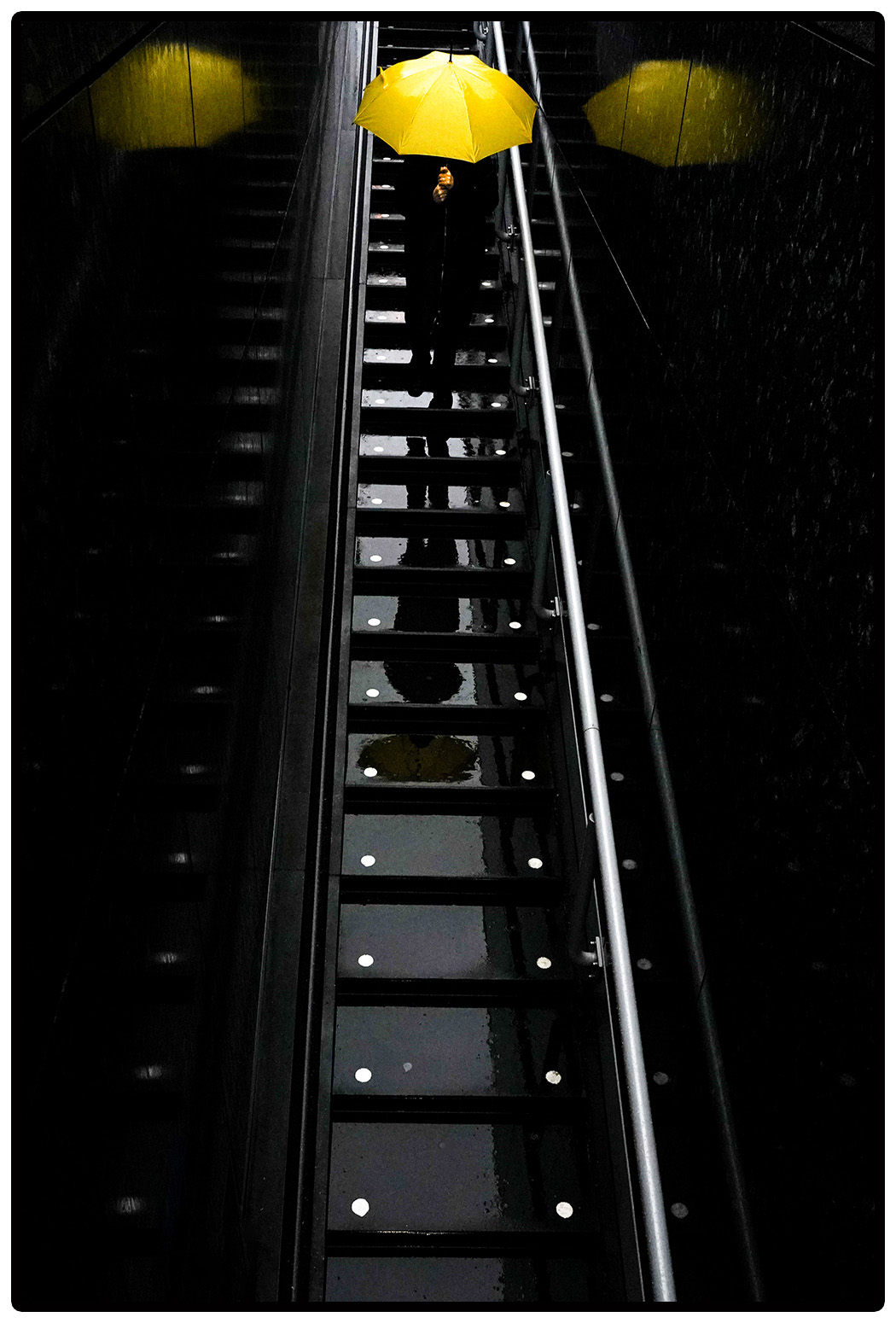
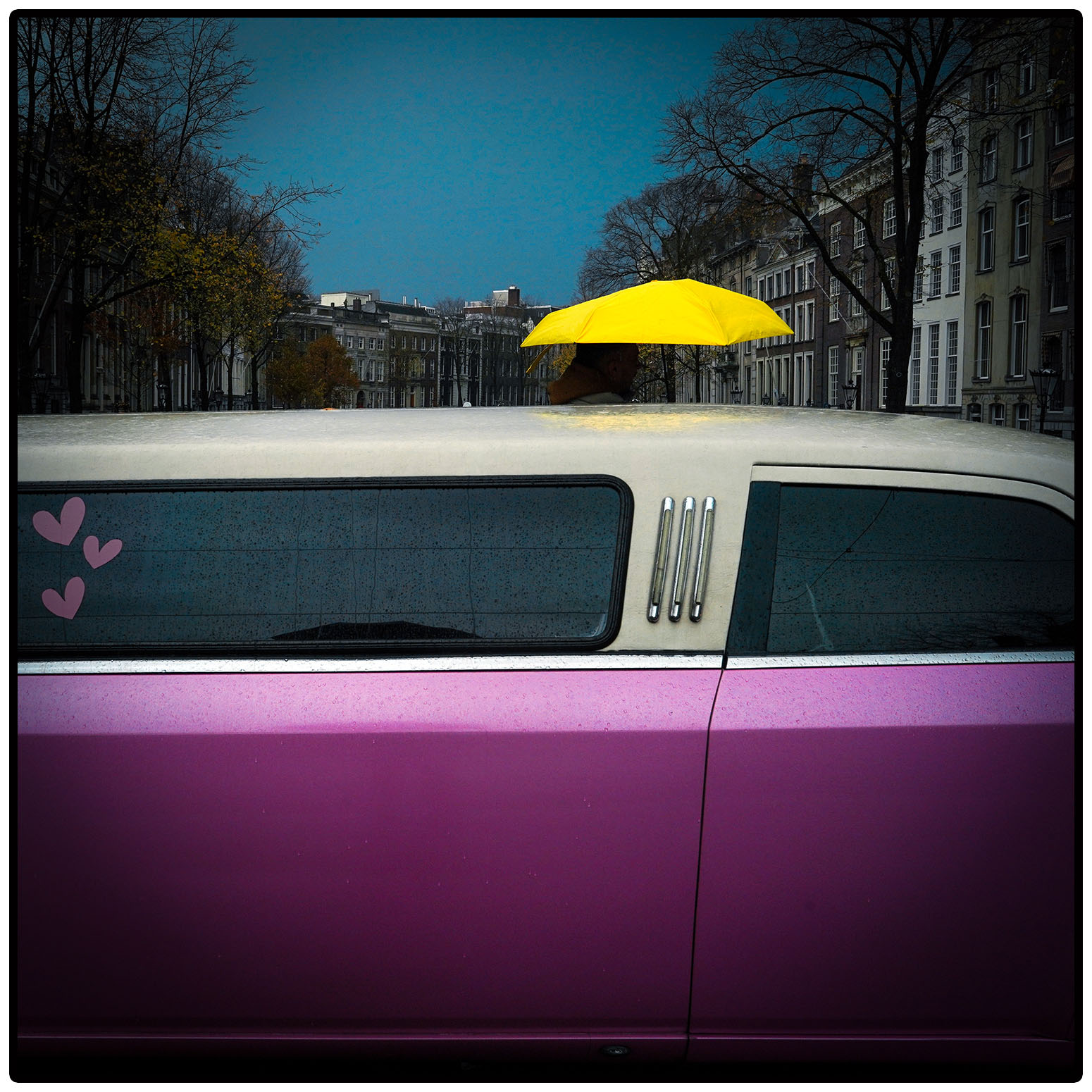
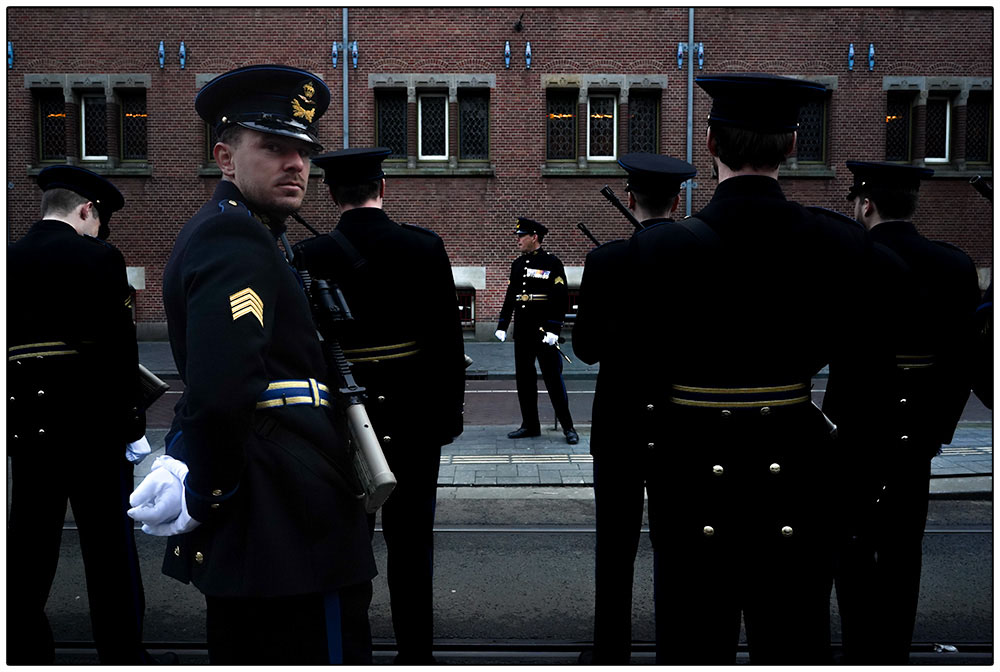
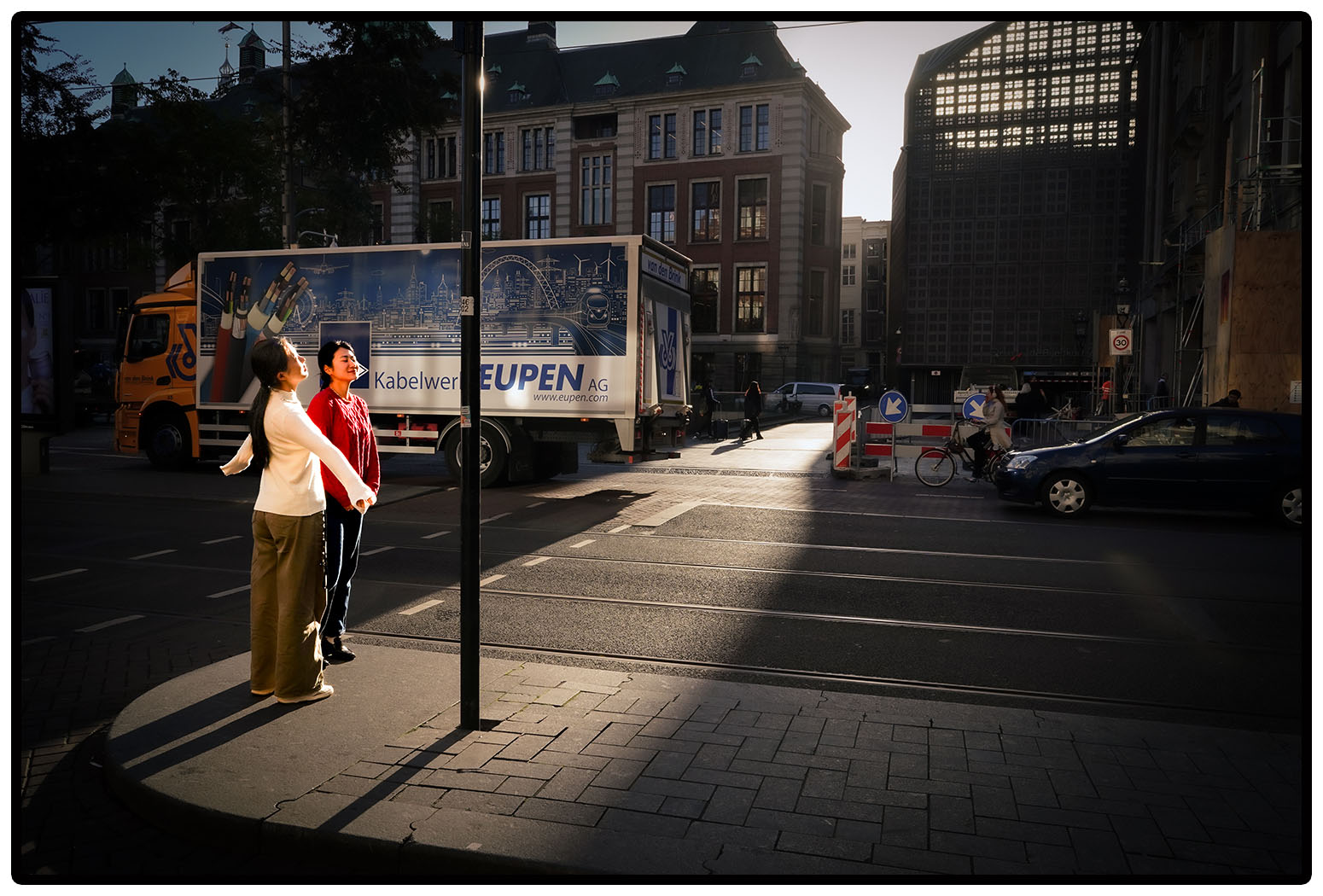
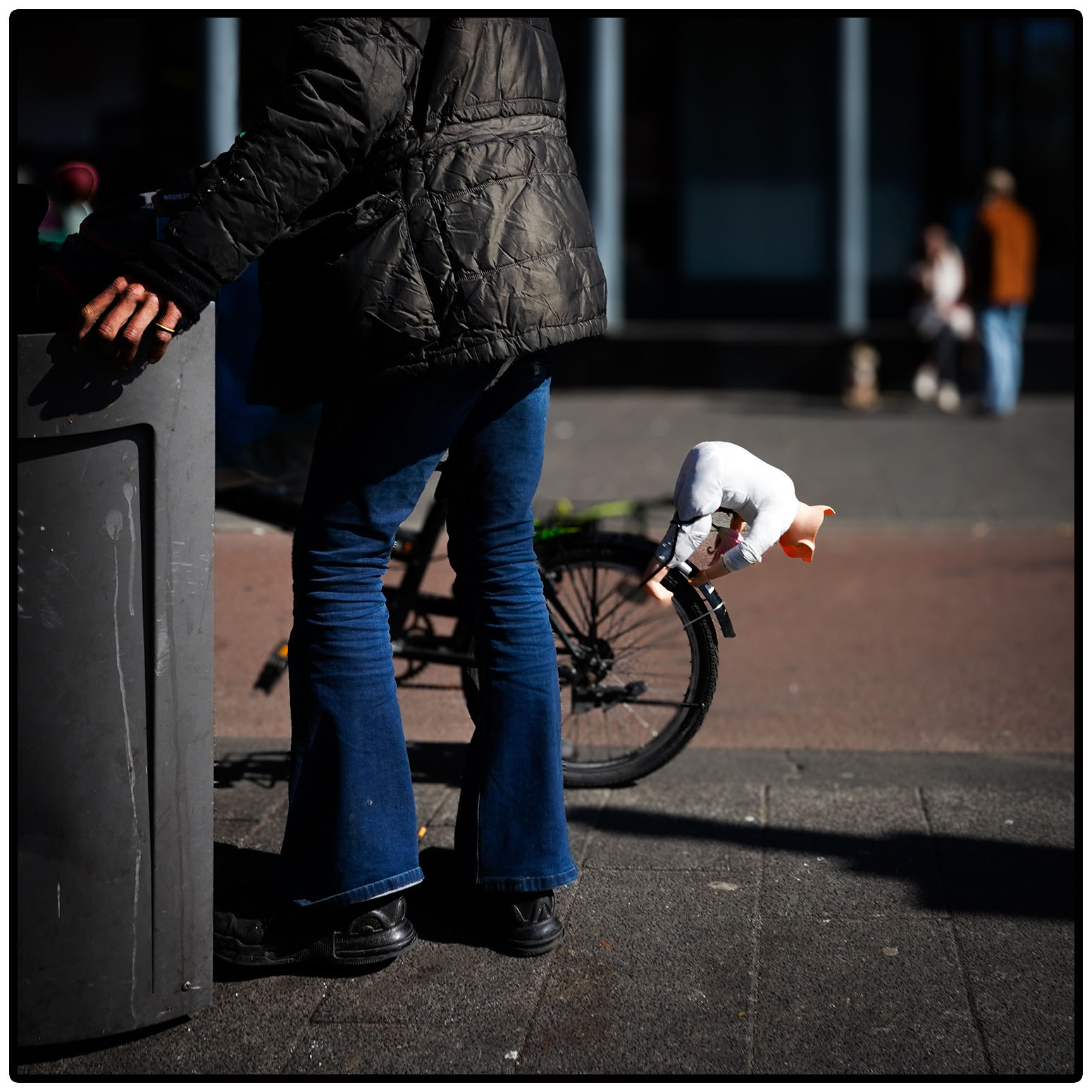
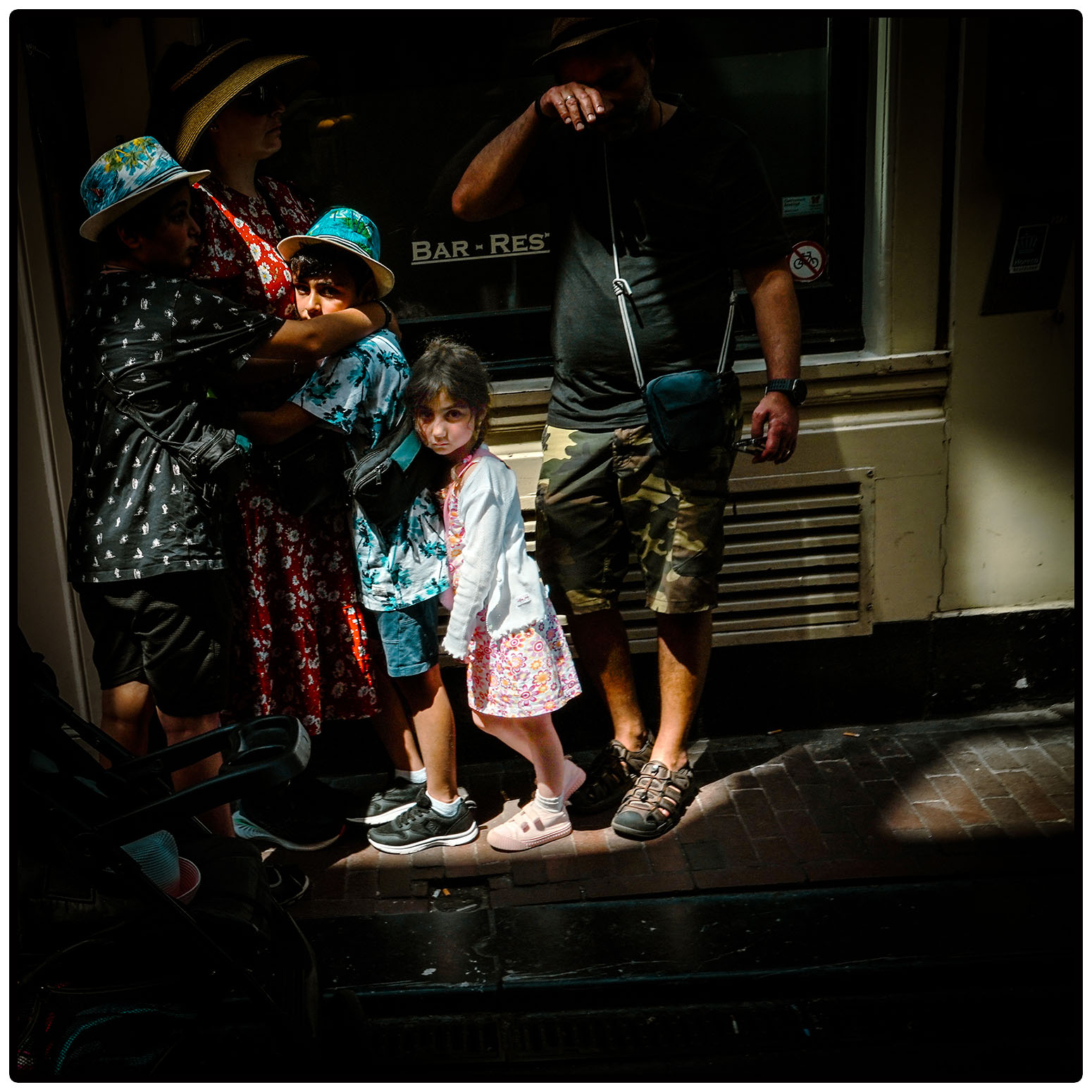
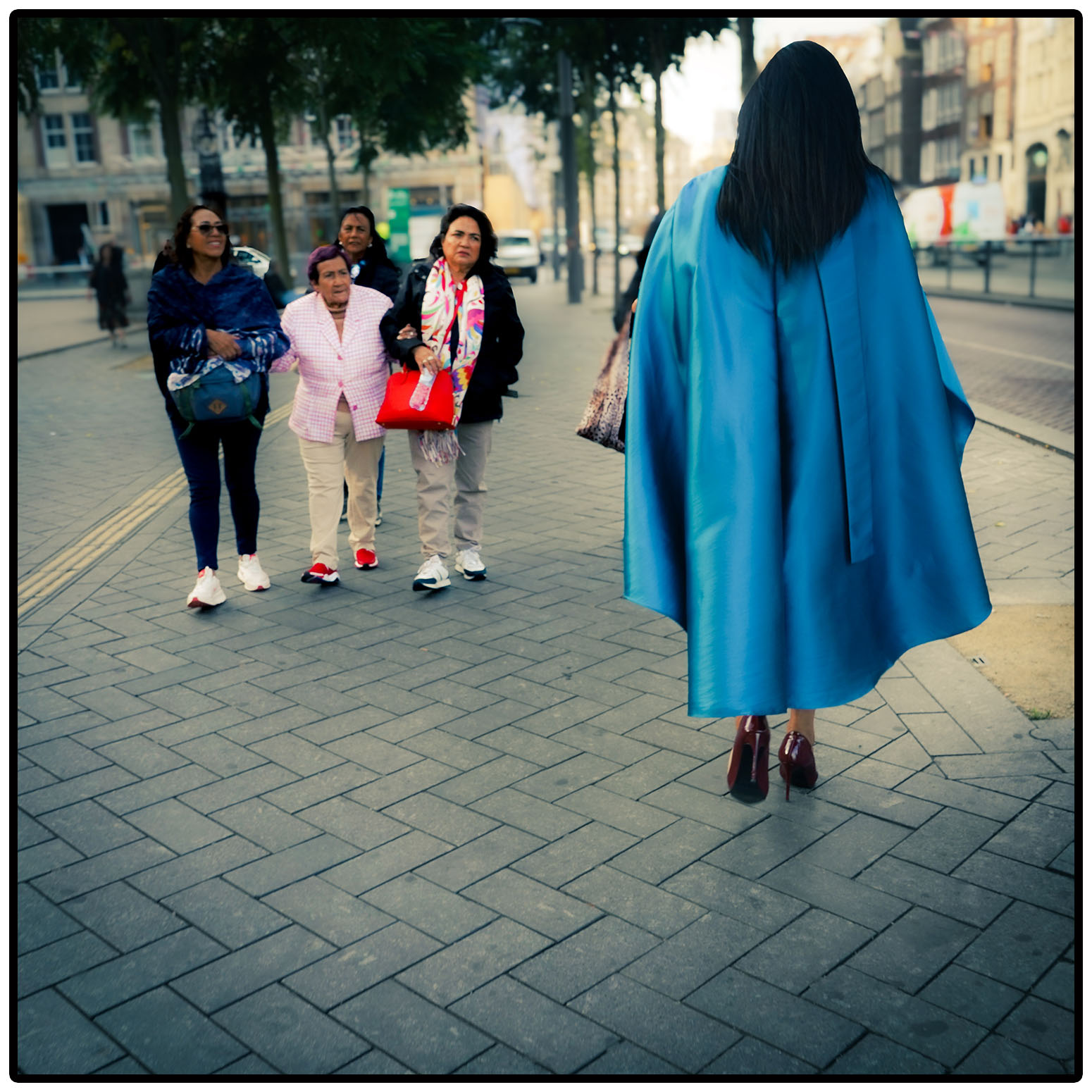
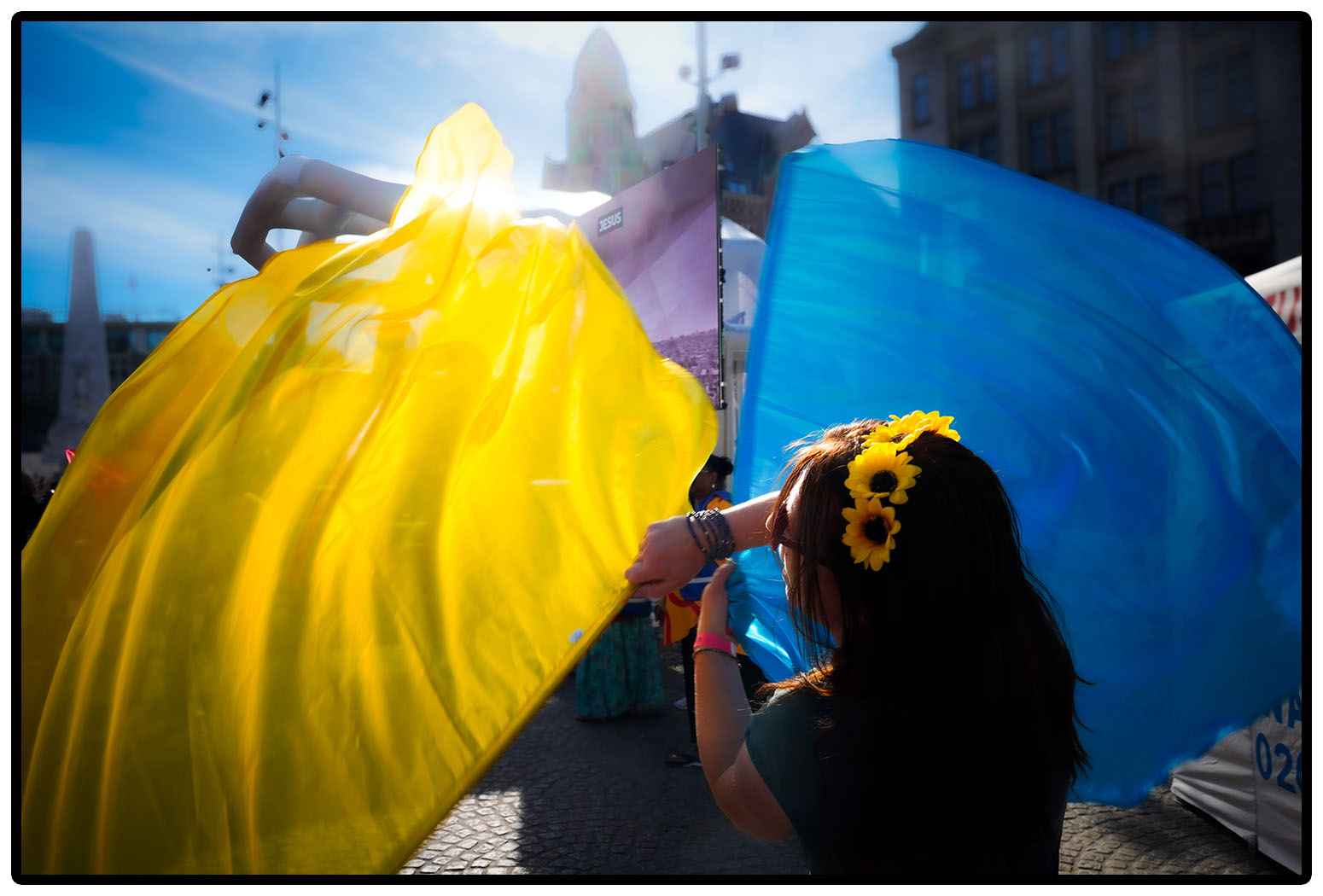
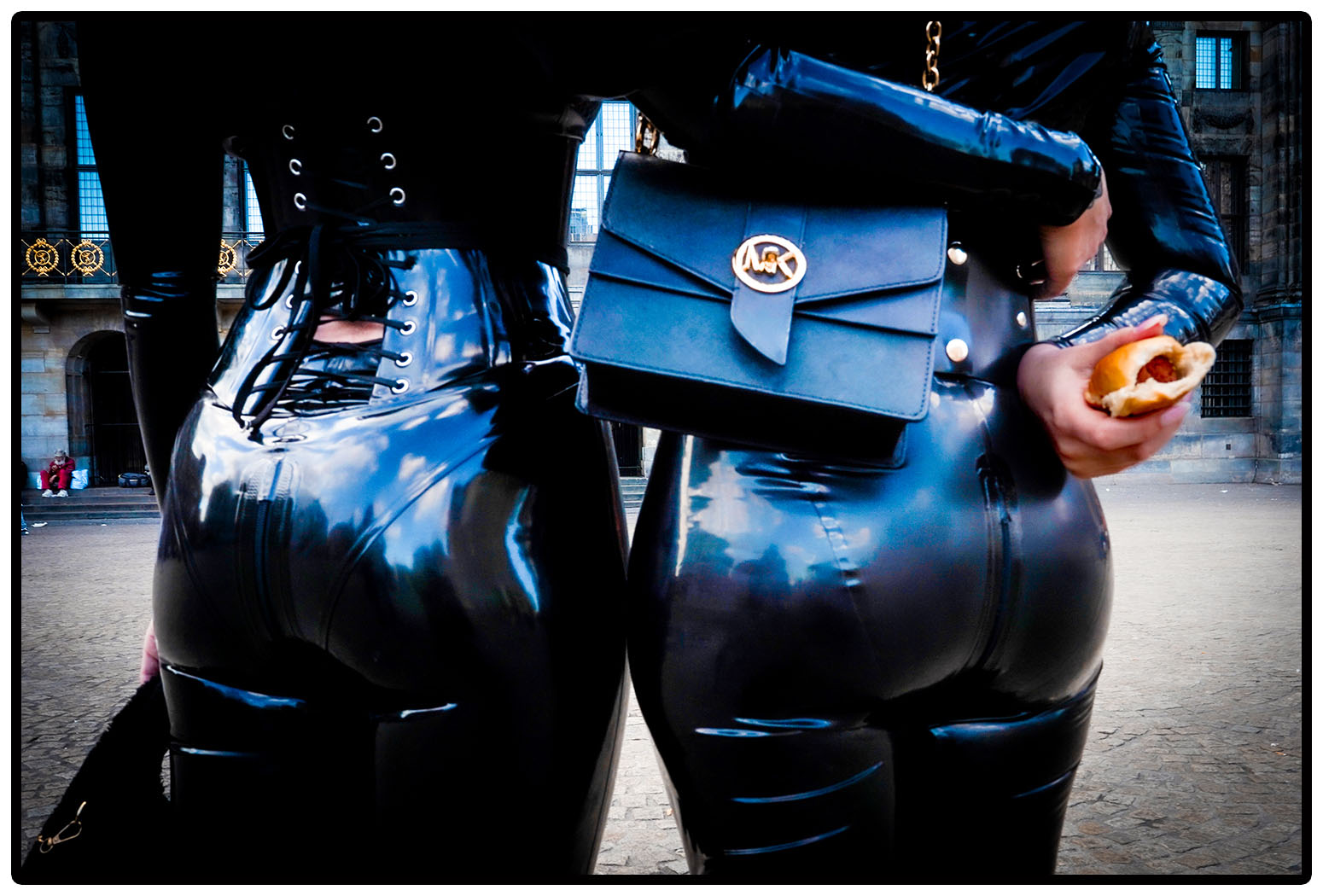
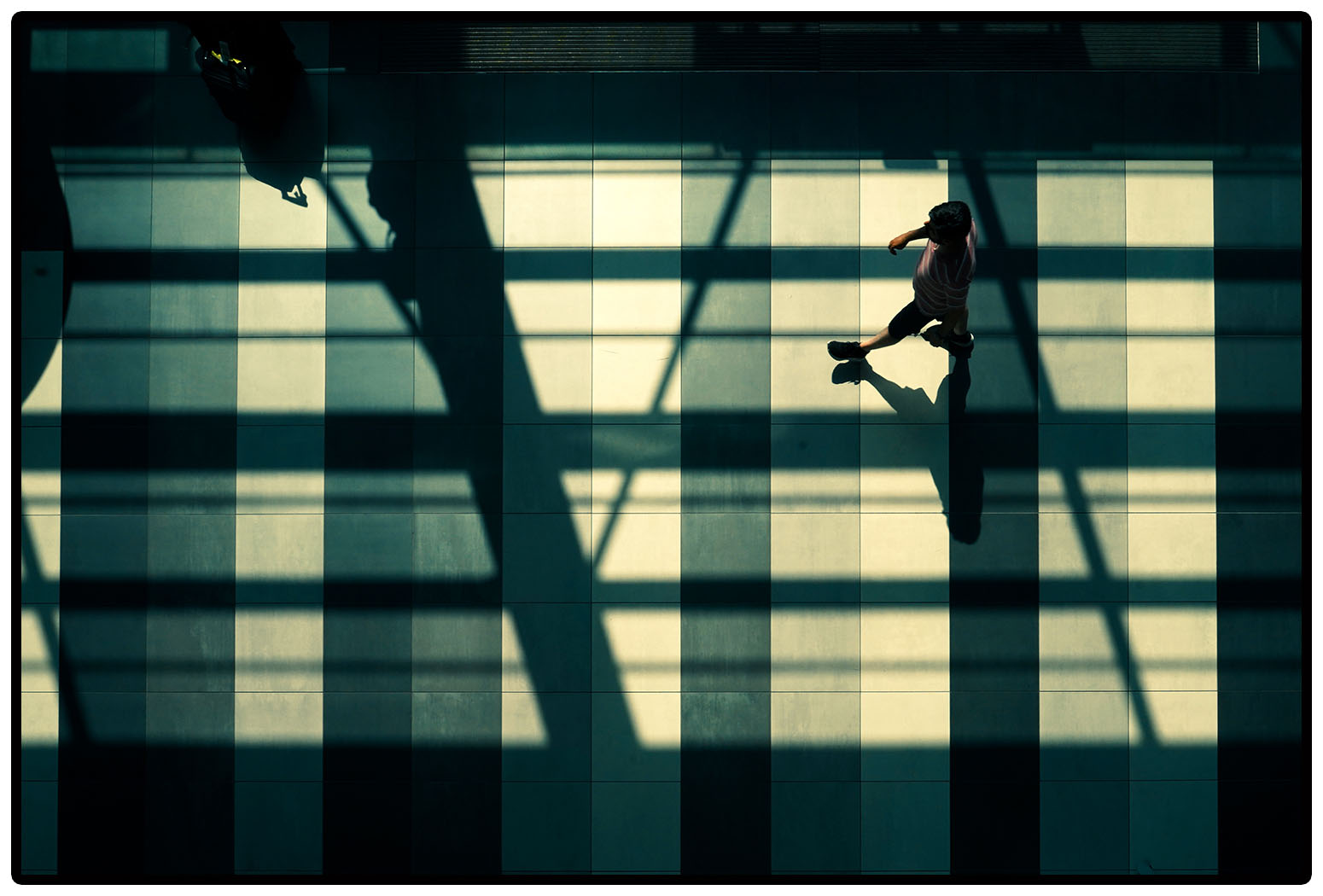
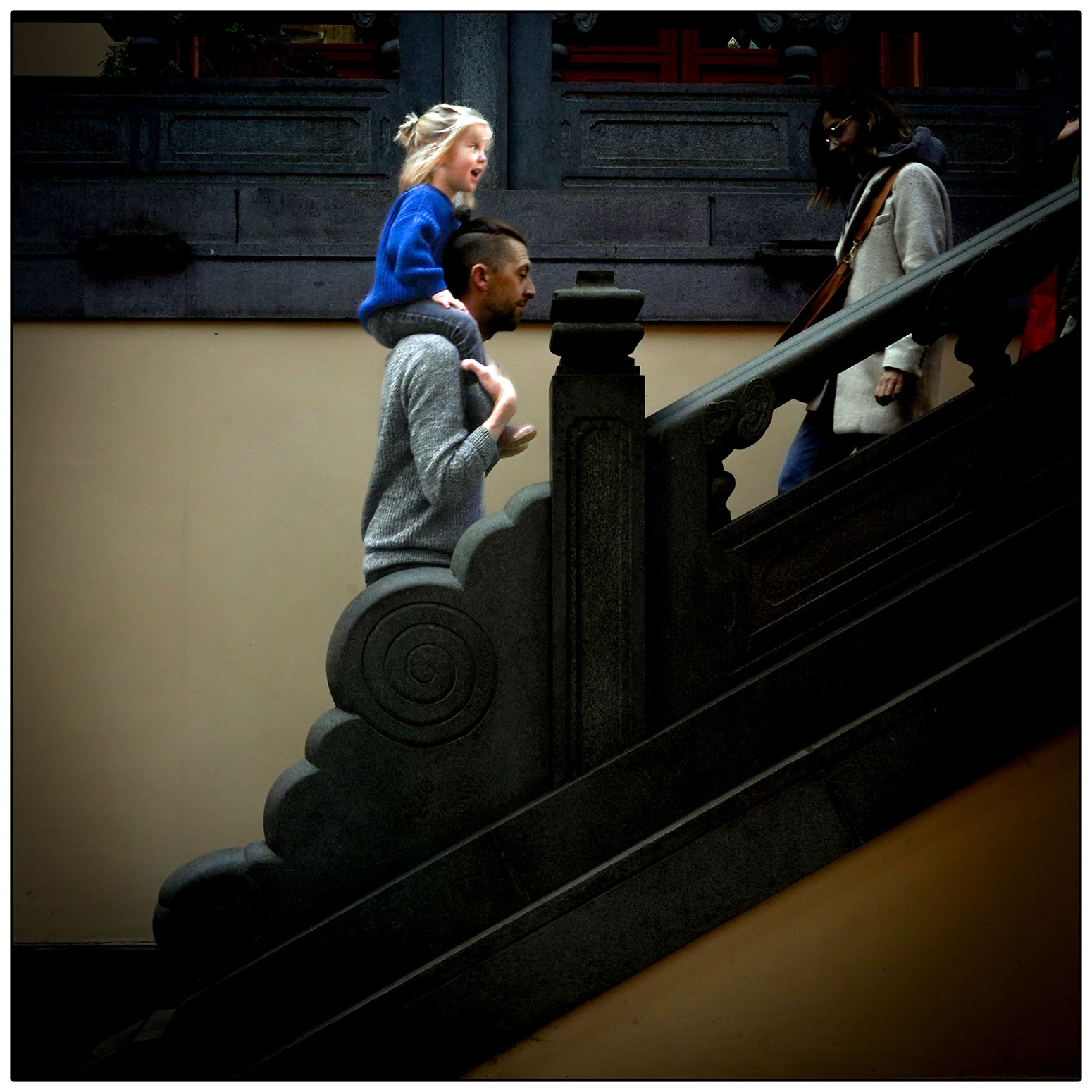
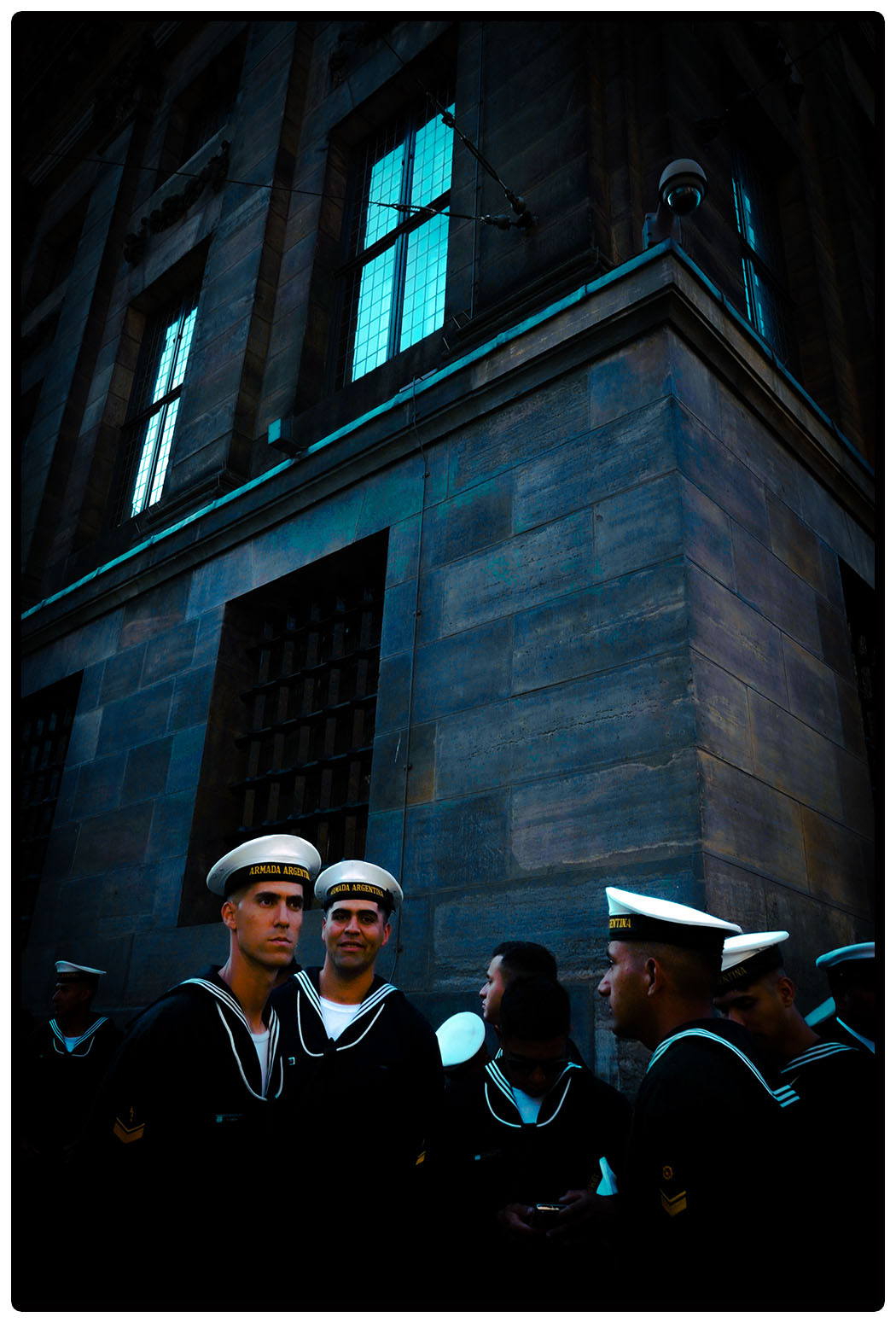
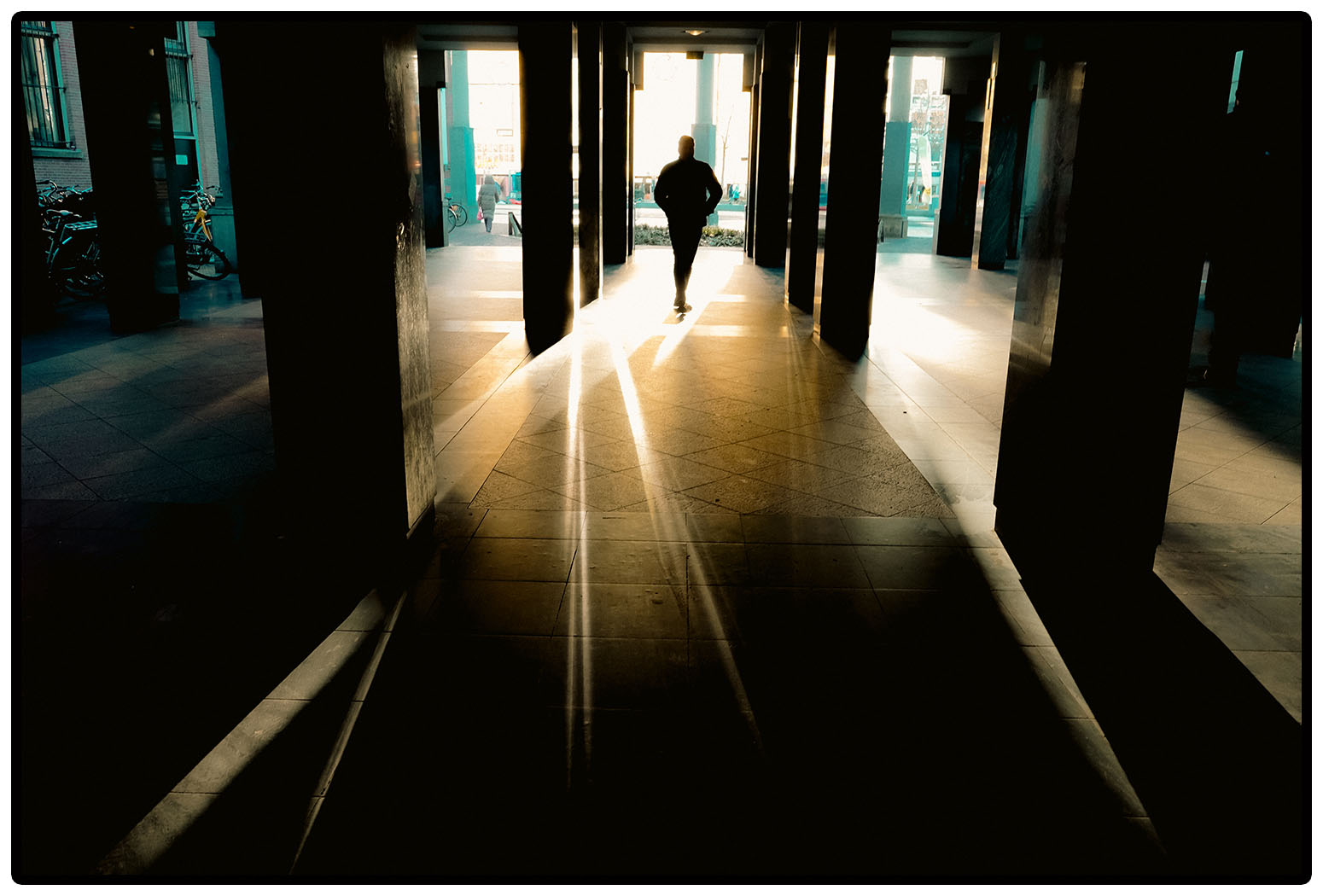
As a street photographer, I work on a long-term project in the old city center of Amsterdam. When the light is right, I tend to walk the same routes. For me, street photography feels like street theatre: I move through the city like a dramaturge, searching for images. I am primarily interested in strong contrasts of light and color. People play a role in my work, but they are not the central subject. In the urban landscape, the human figure is a passing presence. I work close to my subject, yet with enough distance to allow the city itself to speak.
By walking the same streets over and over again, I learn to truly see the everyday. I am not searching for the unfamiliar. I do not travel the world or seek out distant, exotic places. On the contrary, by repeatedly walking the same paths day after day, I remain open to wonder. In this sense, I work in the tradition of photographers who stayed close to home like Robert Doisneau, Fred Herzog or Saul Leiter, returning daily to the same neighborhoods and streets, often wandering without a clear destination.
My fascination with photography began at a young age. During my military service, I was trained as a professional photographer. At that time, I worked as a photojournalist: traveling across Europe, writing stories, producing photo essays, and spending long days in the darkroom. I contributed monthly to a magazine. After my service, I created photographic documentaries in Poland, the Baltic States, and Ukraine. I traveled through Crimea, visited Odessa, and photographed inside the former KGB prison in Vilnius. Inspired by Ed van der Elsken, I began a long-term project in Amsterdam Oud-West in 1993, which resulted in several exhibitions.
Besides being a street photographer, I started a long career in data and data analysis. During this period, I became increasingly involved with artificial intelligence. I worked for many years as a data scientist, developed a fascination with image manipulation, and experimented extensively with computer-generated art. So, I got used to looking for patterns and connections. I also learned to think based on facts. I asked myself: What makes a good (street) photo? Can we define clear rules to judge this?
My passion for street photography eventually led me to conduct my own research. I wanted to understand what makes the work of photographers like Ed van der Elsken and Henri Cartier-Bresson so distinctive. What defines their visual signature? This question resulted in a two-year study in which I analyzed hundreds of monographs by street photographers. Over time, clear patterns emerged. My research showed that a photographic signature can be described through six categories of stylistic characteristics. The work of well-known street photographers stands out because they introduce something new within one or more of these categories, expanding the visual language of street photography. This research resulted in the book The Photographic Signature of the Street Photographer in Six Stylistic Characteristics and in several articles published internationally.