
Street Photography Doesn’t Need More Rules. It Needs Better Photographs
Every few months photographers gather online to argue about what is—and isn’t—street photography. They’re asking the wrong question.
We attempt to define street photography, at least in part, because the broader category of “photography” has become increasingly unwieldy. The advent of digital photography changed everything. Things get messy when more than five billion photographs are made every day. As a result, we hem and haw and write articles about what, exactly, constitutes a street photograph, a landscape photograph, and so on. While there may be some benefit to this endeavour, it is also fraught with dangers.
One of the biggest drawbacks to hemming in the definition of street photography is that photographers begin trying to follow the recipe, which leads to repetitious, boring, hackneyed images. We see the same photograph again and again. And again.
Indeed, this has become one of the biggest obstacles to attracting a broader commercial audience to street photography, especially the more modern stuff. We become inundated with the umbrella-holding puddle jumper, the “light and shadow” fedora-wearing old man, or the young dude standing in front of graffiti.
Don’t believe me? Scroll through Instagram and street photography begins to resemble cosplay. The same umbrellas. The same silhouettes. The same Leica aesthetic. The same “decisive moment” recreated thousands of times. Ironically, a genre devoted to the unexpected has become painfully predictable.
Much like the Oprah Book Club unintentionally spawned a recipe for authors—one that quickly led to cookie-cutter “Oprah novels”—rigid rules for making a street photograph encourage a backward approach to the creative process. Instead of making photographs and letting the work define itself, photographers begin making photographs that satisfy someone else’s checklist. It seems to be stifling creativity entirely. These days I’d rather go to the dentist than judge another street photography competition. Half the entries feel like they’ve all been taken by the same person.
Perhaps all a street photograph really needs is a photograph worth looking at.
Does a street photograph need a person? Does it need an urban landscape?
These, of course, are the questions the myriad of articles examining the nature of the genre attempt to answer. The questions themselves are not invalid, but perhaps they are better treated as rhetorical questions—food for thought rather than problems demanding definitive answers.
With every answer we imagine, we quickly run into exceptions.
For example, if a street photograph requires an urban landscape, does that mean photographers who live in rural or remote areas are effectively excluded from the genre? That doesn’t seem right. Are Martin Parr’s seaside resort photographs not street photography? And what about William Eggleston? His famous tricycle photograph contains neither a person nor an obvious urban backdrop, yet it is widely embraced within street photography circles.
As you can see, things become complicated very quickly when we try to fence in the genre this way.
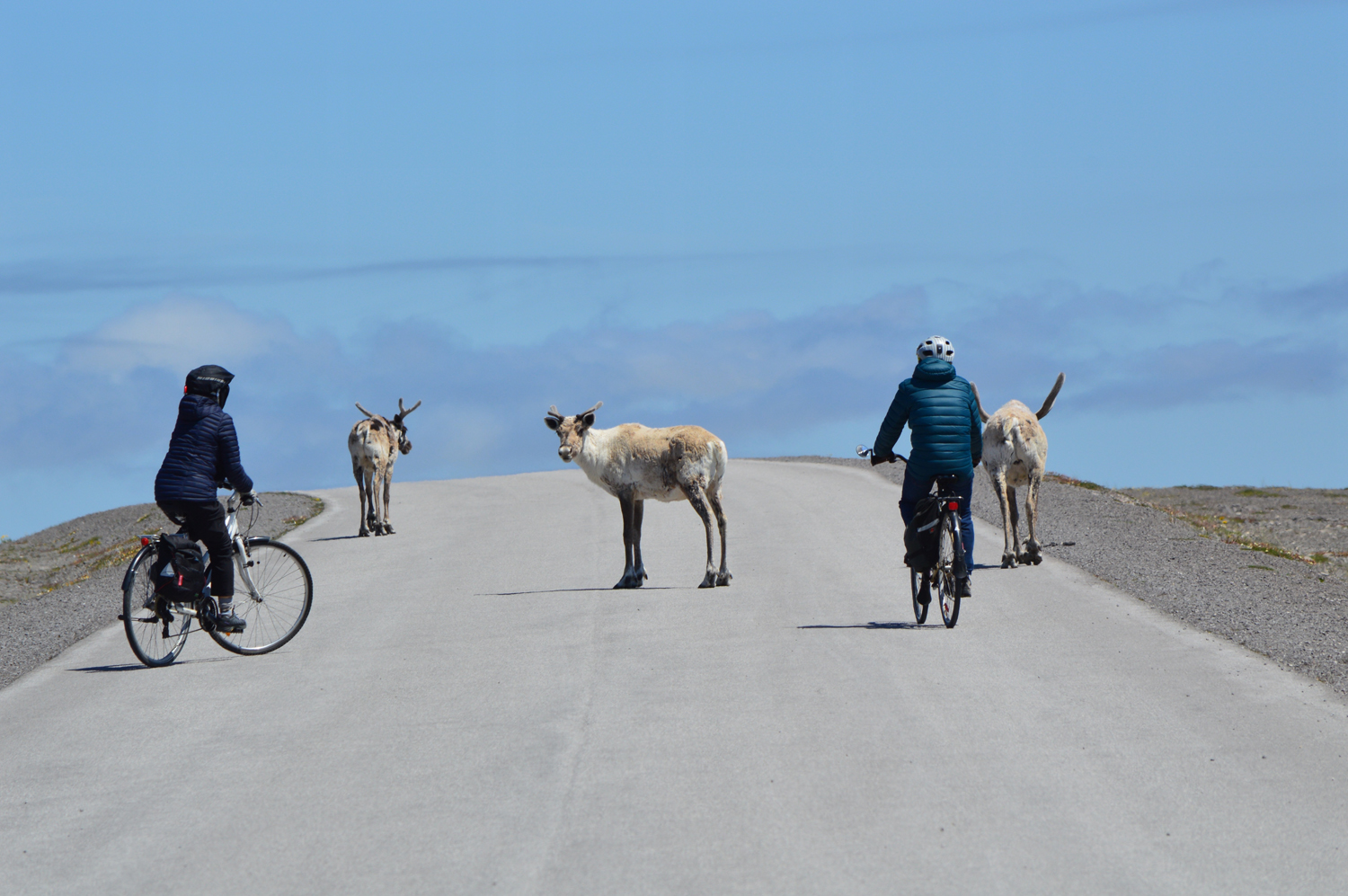
Copyright ⓒ Susan N. Sweet
Take the photograph above, for example. It was taken this summer in Newfoundland by Canadian painter (and my aunt), Susan Sweet. Is it a street photograph? Whatever your answer, it was this photograph that got me thinking seriously about the question in the first place.
The next natural question, then, is whether street photography even needs to be a genre at all.
I’ve always been a fan of allowing a photograph to speak for itself. No words required. In much the same way, I’m becoming increasingly comfortable with allowing photographs to simply be photographs—open to individual interpretation.
Great photographs create genres. Genres have never created great photographs.
Now, I recognize that genres will continue to exist in photography, just as they do in music, cinema, and painting. I’m not proposing we abandon categorization altogether. What I am proposing is that we widen our perspective when it comes to accepting what might be considered street photography.
Let’s worry a little less about social media algorithms and the labels they reward, and a little more about what’s actually in front of our lens. Let’s permit photographers the freedom to create before they categorize.
If a photograph can enrapture me, challenge me, or disturb my way of seeing, I usually consider it a good photograph. And if I find a good photograph, that is almost always enough.
The moment a definition becomes a checklist, creativity starts to die.
The more time a community spends debating definitions, the less time it spends making memorable work. History rarely remembers the artists who followed the rules. It remembers the ones who made everyone rewrite them.
After all, genres usually follow great work—not the other way around.

Leave a comment