
Xiomaro: Sharing a Slice of the Big Apple Through Street Photography
Whenever we speak about street photography, New York City is one of the first locations that come to mind. Known for its vibrant city life and colorful personalities, the so-called Big Apple has been a street photography mecca for decades. The city is also home to generations of homegrown street photographers who respond to the allure of telling its countless stories from their own perspectives. Among them is artist and photographer Xiomaro, whose unexpected introduction to the craft is a story in itself.
“I’ve always loved the arts, but my main interests were music, painting, and writing—subjects I studied extensively in college while also majoring in philosophy to prepare for a legal career,” shares Brooklyn-born Xio. Following his stint as a corporate litigation attorney, he started his entertainment law practice representing pioneering recording artists like Village People, Lisa Lisa, and MC Shan. Even during this time, his affinity for art endured, the thought of documenting the fascinating places, faces, and situations he encountered always lingered in his mind. “If smartphones had existed in those days, I would have some really compelling photographs!”
Copyright ⓒ Xiomaro
But it wasn’t until he recovered from cancer that Xio took the chance to do so. Photography became his way to cope creatively with the difficult process of reevaluating his life, and it was in the streets that he discovered how everyday life can be just as captivating as the music industry. Eventually, he began to transition out of the legal field so he could devote more time to photography. For several years, he spent five days a week documenting whatever he found interesting in New York City’s streets.
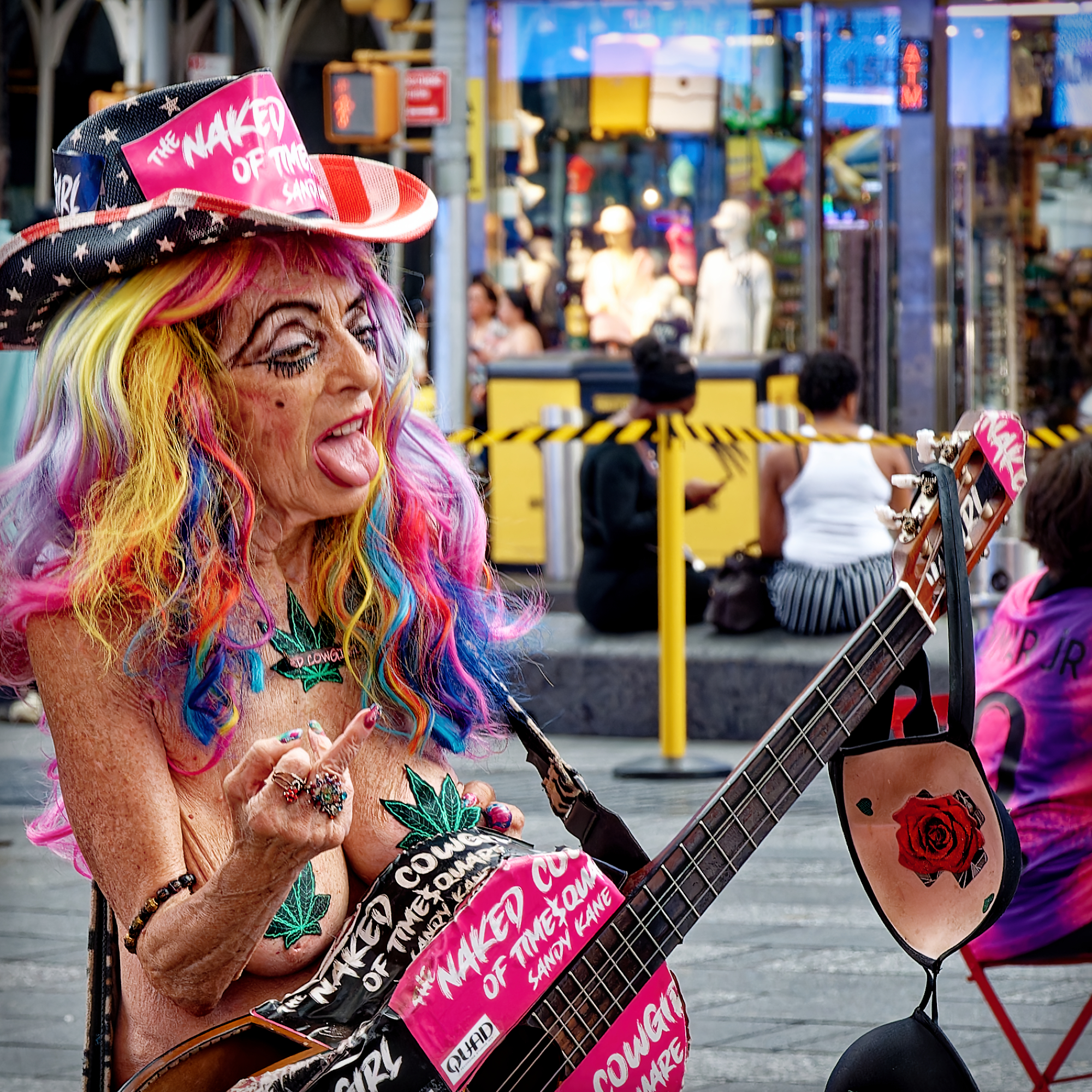
“By varying my route, I encountered different people and scenarios. Sixth Avenue, for instance, had more business types, while Eighth Avenue had more locals. Out-of-towners could be found everywhere, especially in Times Square. Now that I’ve left the legal profession, I photograph on the street as often as I can in between other projects such as exhibitions, National Park Service commissions, and books.”
Copyright ⓒ Xiomaro
Copyright ⓒ Xiomaro
Copyright ⓒ Xiomaro
From national parks to city streets
His National Park commissions comprise another interesting chapter in his creative journey, where he photographed historic structures like George Washington’s headquarters and Theodore Roosevelt’s home. “These are essentially museums, so I concentrated on capturing things that are difficult to see or appreciate during a tour,” he recalls. Despite the constraints with time and access to most of the sites, he was able to capture rare perspectives and close-ups of unique, one-of-a-kind artifacts, including those never displayed for public view and remote, ecologically-sensitive locations.
With the sheer difference in scenery and subjects between the more relaxed National Parks and New York City’s busy streets, finding a connection may seem unlikely. After all, even his artistic influences for both locations are completely different. The masterpieces of Goya, Rembrandt, and Vermeer evidently inspired his National Park photography, while his reverence for photography icons like Saul Leiter, Garry Winogrand, and Joel Meyerowitz shines in his street photography work.
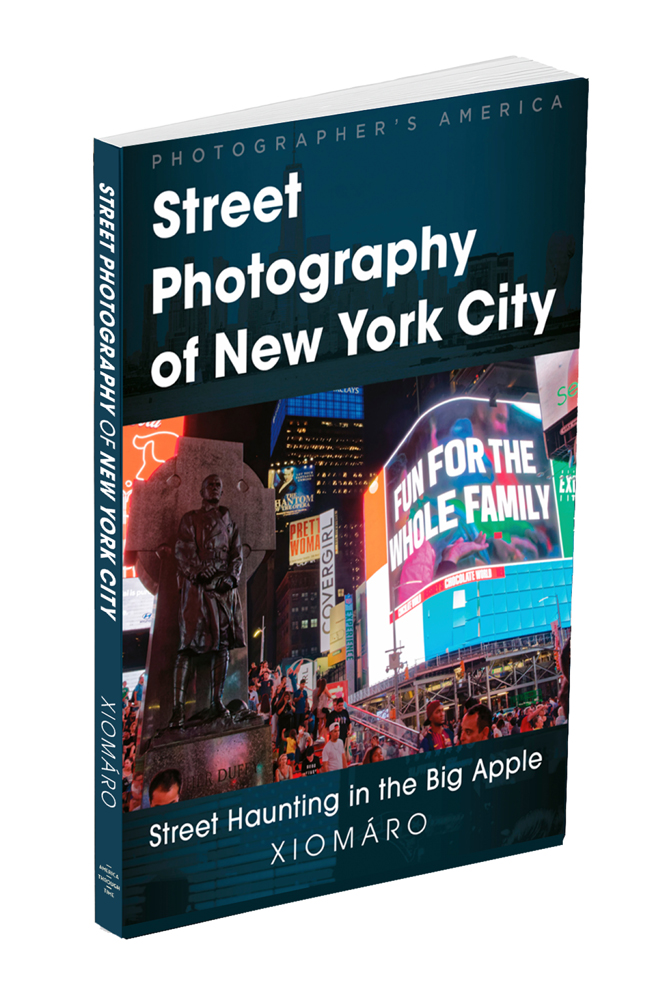
However, for Xiomaro, whose work has been recognized for its “unorthodox look” and “focus on striking details,” it’s all about the search for the hidden and the overlooked. This approach is one of the highlights of his new book, Street Photography of New York City: Street Haunting in the Big Apple ( Link at the end )
Copyright ⓒ Xiomaro
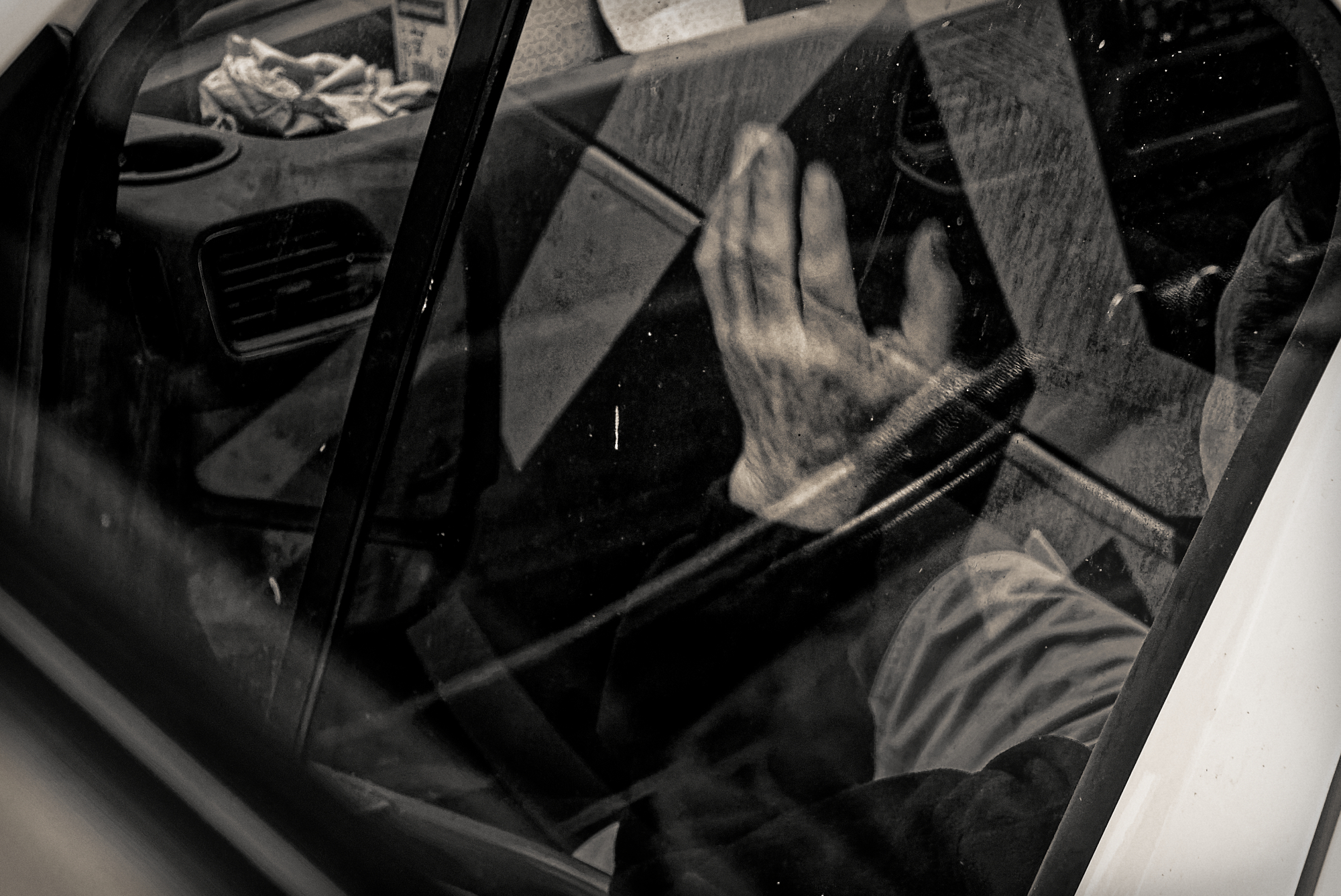
“My new book includes photographs of small architectural details that hardly anyone notices, even on famous facades like Radio City. There are kaleidoscopic compositions so wild and abstract that when I post them on certain social media platforms, I sometimes get warnings that AI images are not allowed.”
Peeling the layers of the Big Apple
When Xiomaro began documenting everyday scenes of New York City, his initial goal was to keep his skills sharp and push his creativity outside of his National Park Service commissions. He thought about challenging himself with the total opposite of working with a big DSLR propped on a tripod, shooting stationary scenes and subjects. He had to learn how to shoot a smaller camera handheld, fast and more decisively, to catch up with the variety of scenes happening all at once around him.
“I never expected these ‘exercises’ to amount to anything,” he recalls. “But in 2023 a publisher contacted me out of the blue requesting that I submit a book proposal on street photography. They said they found me on Google, so I’m guessing they must have come across news reports about my work. It was surprising because, in 2017, it took months of persistence to secure a deal for a book on my National Park photography.”
With it, his new book came about as a welcome opportunity for his street photography to culminate in a body of work that represents him and his creative journey as an artist. It enabled him to peel the layers of the Big Apple in more ways than one.
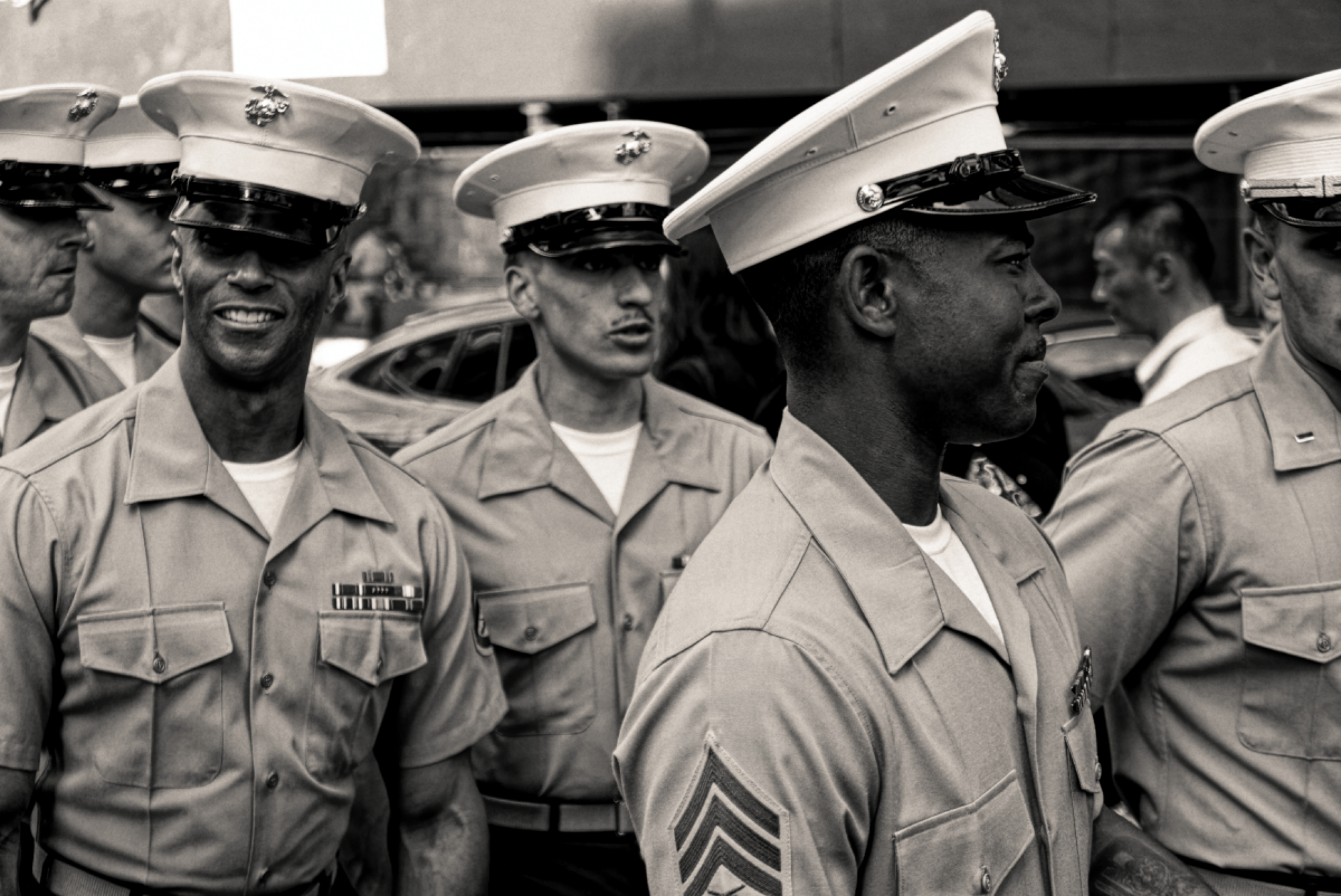
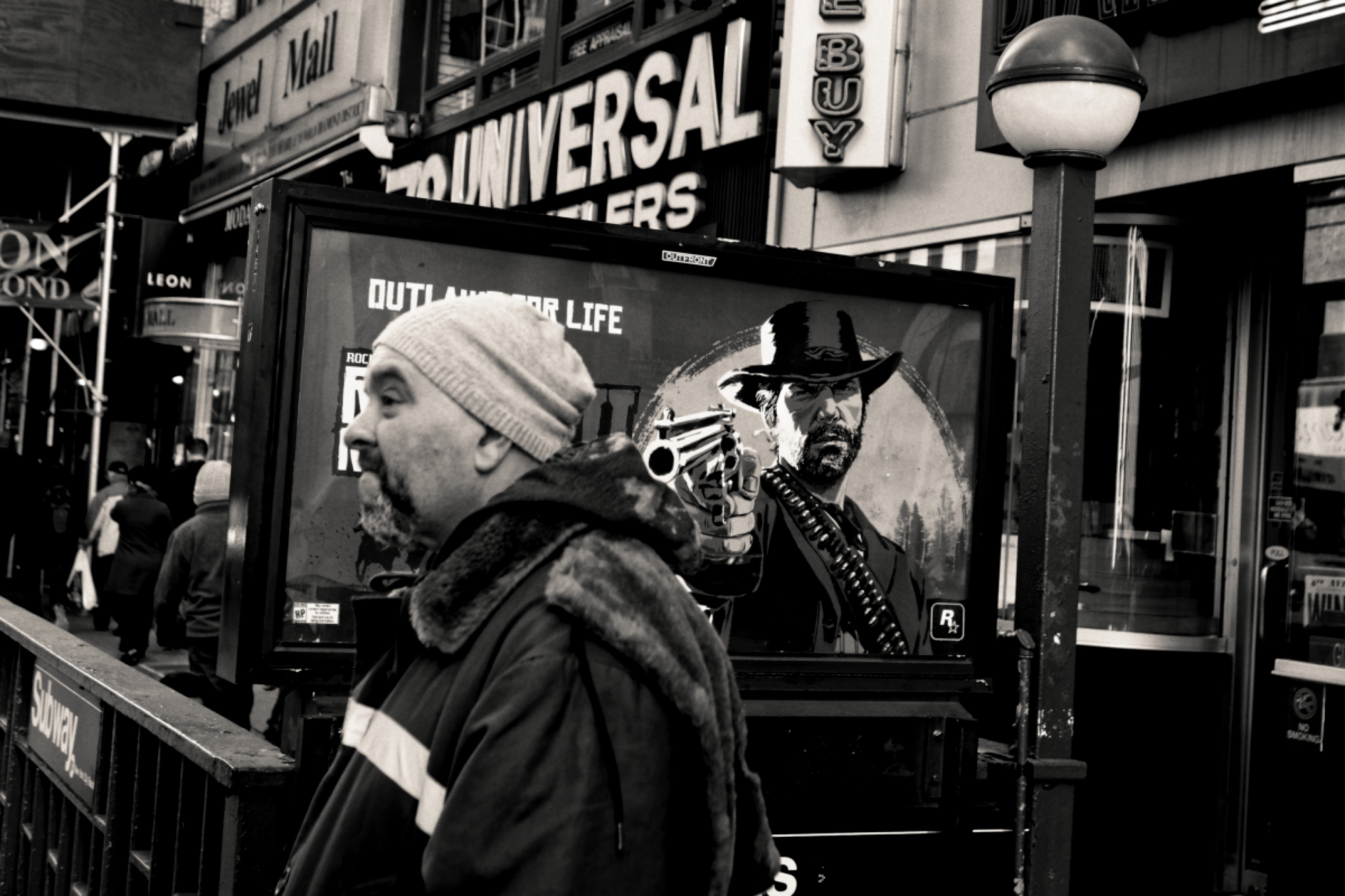
Given the nature of his commissioned work for the National Park Service, he worked with color most of the time. Street photography gave him the freedom to experiment with black and white, and he eventually learned to use the aesthetic necessary for his street work. However, he also acknowledges that some compositions are anchored on color. When he does turn to black and white, the intention is to demonstrate the dark and gritty side of the iconic city that creatives like him have become familiar with.
“In other images, I chose black and white to impart a starkness, grit, and intensity that, for me, connects contemporary New York with the tough, dangerous, and dirty city I grew up in. Steven Spielberg’s Schindler’s List and Martin Scorsese’s Raging Bull take a similar approach. In these films, the directors have their own artistic reasons for working mostly in black and white while using color in select scenes.”
Enriching worldviews on the iconic city
Xiomaro’s new book is but one of the many contemporary bodies of work dedicated to New York City. However, it offers a more timely perspective relevant to the political climate currently shaping the worldviews on the iconic city. Through the collection of images featured in his book, he explores themes such as DEI initiatives and how responses to it reflect — or reject — the ideals of diversity, equity, and inclusion in the US.
“My book examines diversity—the ethnicities, stations in life, jobs, styles of dress, and so much more. It’s part of what makes New York unlike any other city I have visited and what draws visitors from around the world.”
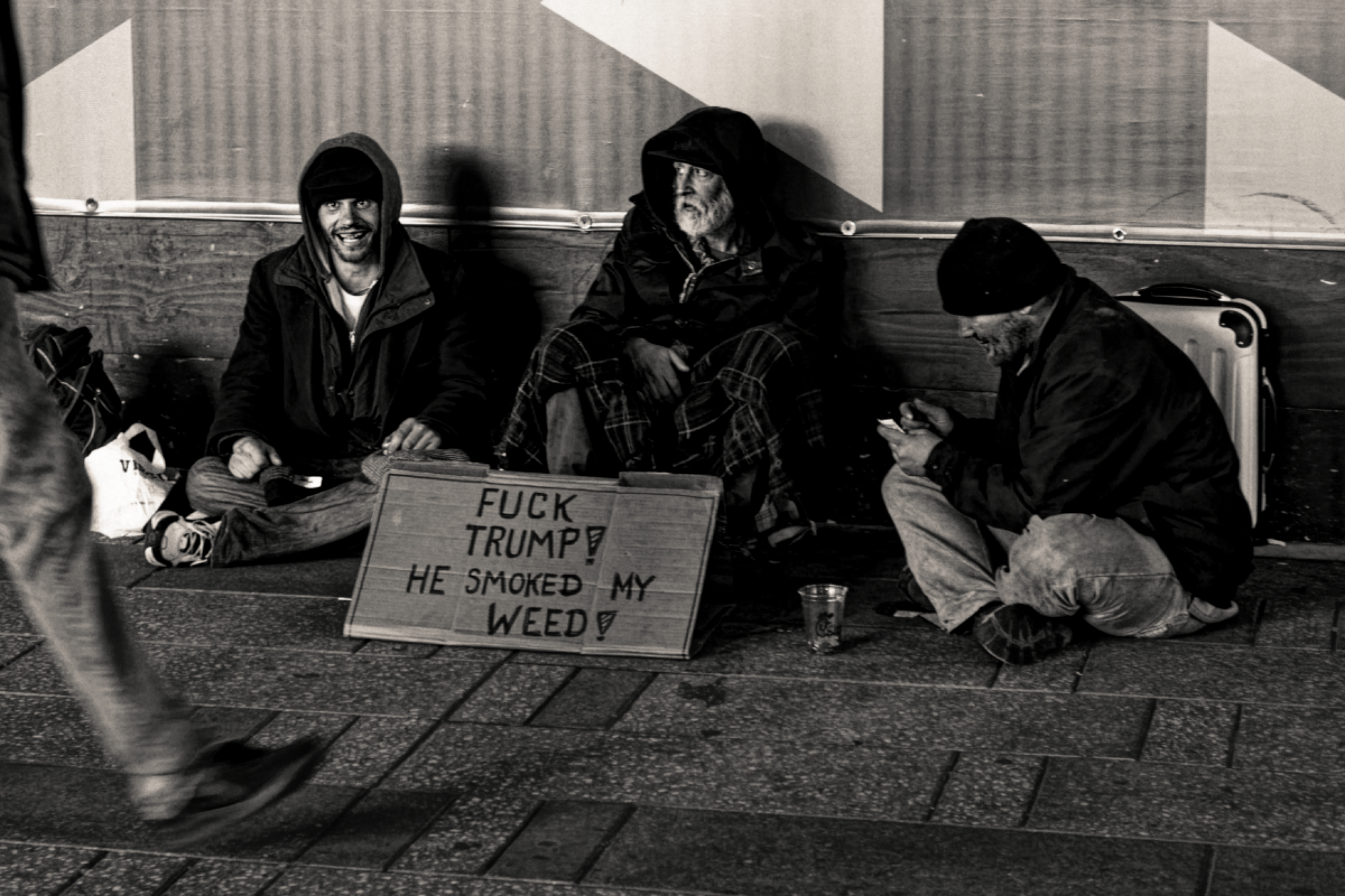
His current favorite photo from the book and the amusing story behind it is just one of the ways he manifested this intention:
Copyright ⓒ Xiomaro
“There’s a photograph I took in a split second as I rushed by. It’s of three men on the periphery of society who are probably accustomed to being ignored by passersby. Yet there’s a dignity in their desire to participate in free speech. Their political protest sign is unique and humorous—and a clever way to draw attention for handouts. It was just one shot, and I was happy that it captured their expressions.“
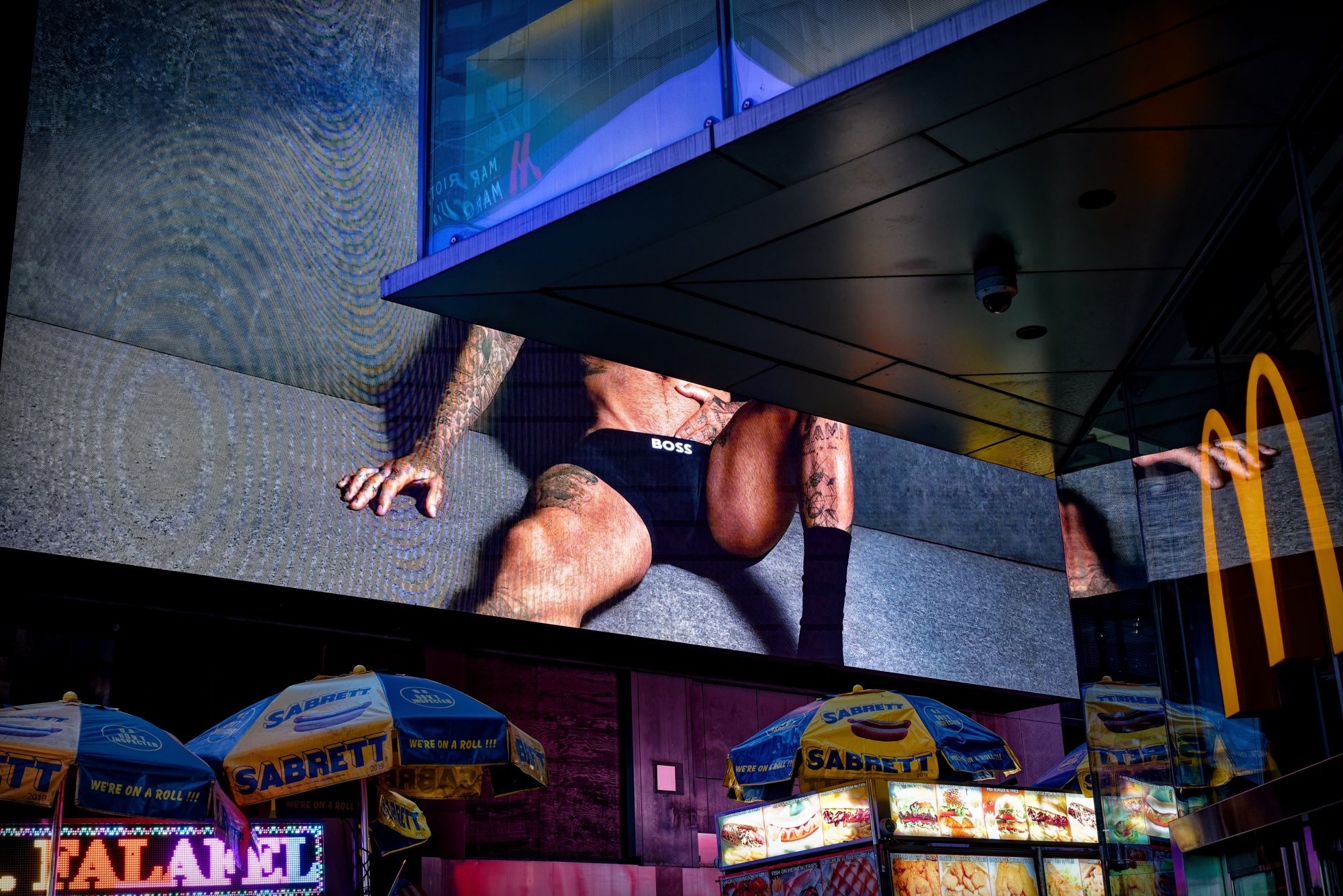
Reflecting on his street photography so far, he realized that while he has no formal photography education, he draws many ideas from music and painting. Inspired by spontaneity and driven by emotional connection, he plays everything by ear and lets the colors lead his eyes to split-second moments worth the shot.
Copyright ⓒ Xiomaro
“As a musician, I divide my mind between an awareness of the song’s structure, key, time signature, and lyrics while simultaneously playing in an improvisational and inspired way—going with the emotion of the moment without thinking too much. I approach street photography in a similar way. I’m aware of my camera settings and the street environment while instinctively shooting whatever connects with me emotionally. As a result, the photographs that interest me most are candid rather than posed, ambiguous rather than obvious, and serendipitous rather than produced. They are images that can be interpreted and enjoyed in many different ways.”
Visit Xiomaro’s website to see the rest of his work and learn more about his new book, Street Photography of New York City: Street Haunting in the Big Apple.

Leave a comment