
Alvaro Vegazo on Street Photography
A civil engineer by profession, Andalusia-based Alvaro Vegazo balances the technicalities of his day job with pockets of creativity provided by documentary and street photography. While photography has been his hobby since his teenage days, he only became significantly involved in the last 10 years.
Today, he makes sure he always has a compact camera ready to capture the situations that he finds eye-catching. Sometimes, that can be his smartphone’s camera, and he sees no problem with that. “Although it doesn’t offer the same features as a camera, for me, the moment captured is more important than the technique or quality of the image. In that sense, the best camera you can use is the one you have with you at the moment,” he notes.
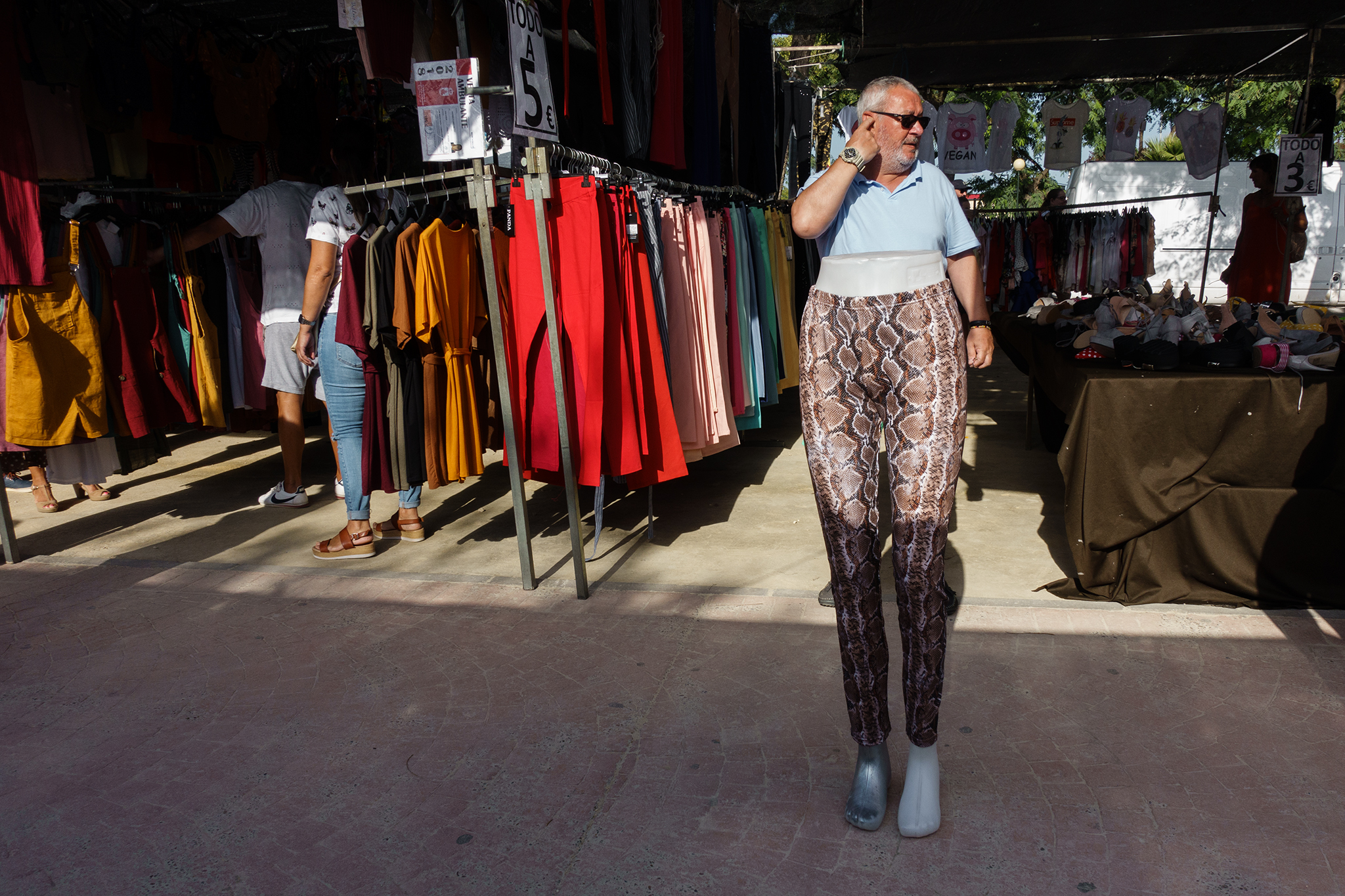
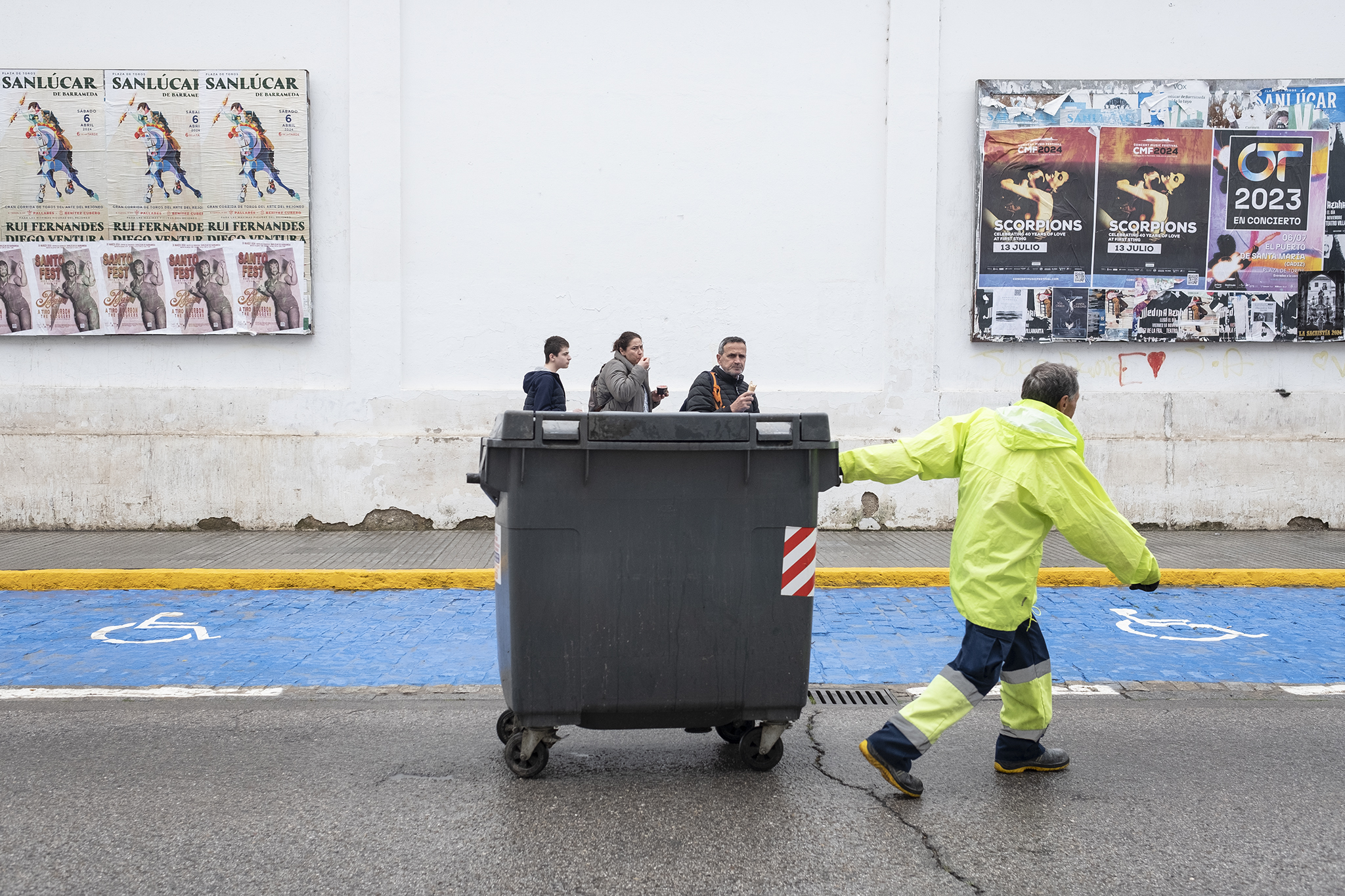
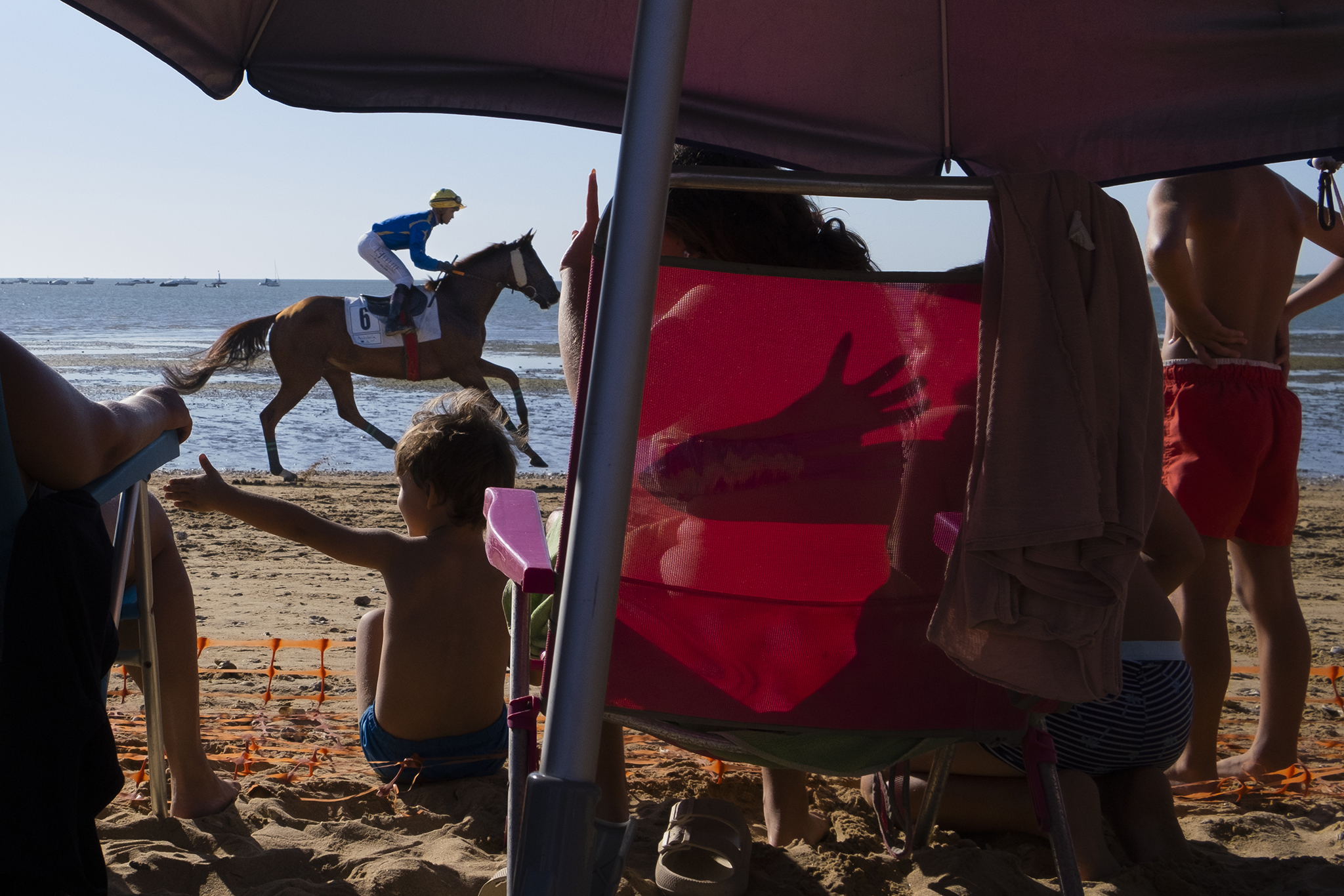
While he tries to capture street photography in all its aspects, he admits that most situations that draw him in are surreal or humorous. On top of these, he also enjoys more dreamlike or poetic scenes, which is likely what led him to start incorporating light and shadows to his work.

Copyright ⓒ Alvaro Vegazo
Copyright ⓒ Alvaro Vegazo
Playing with light, shadows, and color
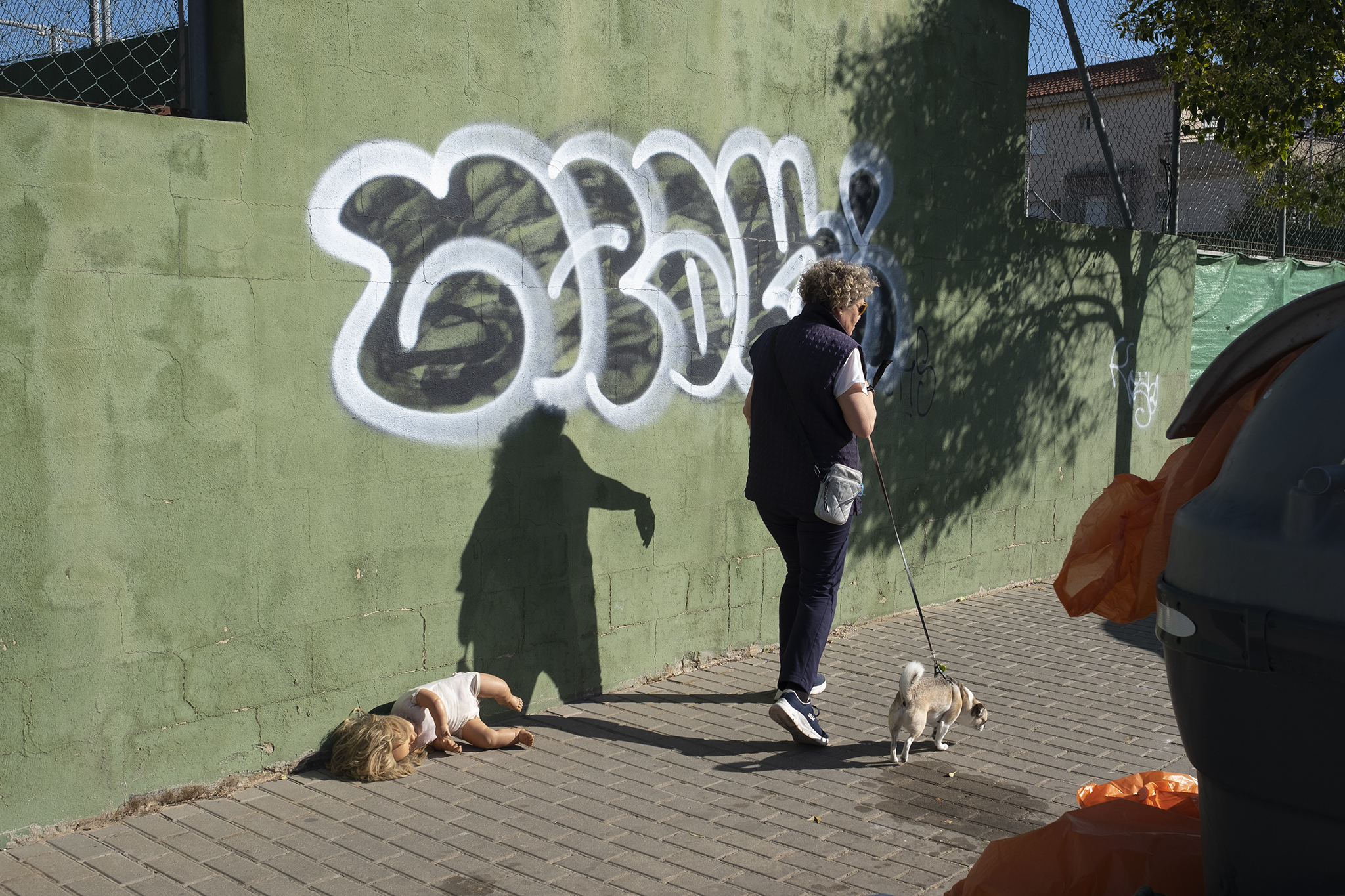
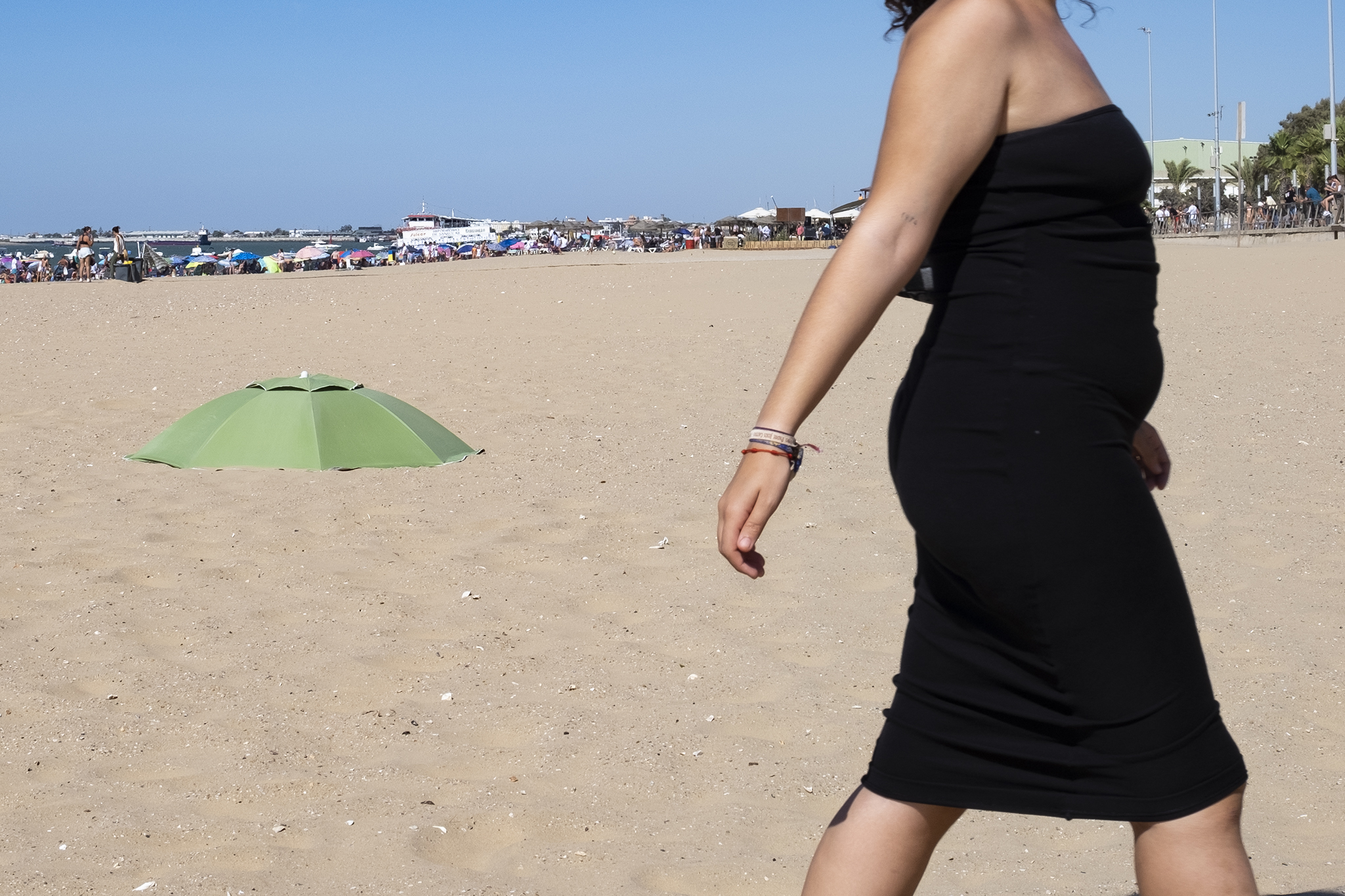
The environment often plays a big part in the creative possibilities that street photographers explore when developing or sharpening their style. Andalusia gave him plenty of opportunities to harness the ability of light and shadows to create dramatic street photos, and he made great use of it.
“The fantastic light we have in southern Spain helped me capture these types of situations in my early days,” he elaborates. “In fact, I live in the so-called ‘Costa de la Luz.’ It was in 2018 that I published my first and only book, ‘Transits of Light,’ which compiled scenes of this kind. After that, I opened up to all the possibilities offered by street photography, including the absurd situations.”
Later, discovering the work of iconic photographers began shaping his work. First, it was David Alan Harvey and his work on Cuba. Next, Alex Webb, Harry Gruyaert, and Cristobal Hara became his major influences when working with color, due to the qualities that defined their work.
“The composition, the use of color, the layers, the atmosphere generated, and the message in their photographs are the details that attract me the most: they are capable of generating very striking images with a high emotional charge. They make you stop and read their photos in depth.”
Primarily working with color for street photography, he uses various color combinations to carry out or emphasize his affinity for light and shadows. In the rare instance that he shoots black and white for its timelessness, he would turn to the works of Josef Koudelka and Raúl Cañibano for inspiration. This preference, he explains, is anchored on how we see and experience the world in color.
“In my opinion, the use of black and white or color depends on the photographer’s intention in relation to what he wants to convey or emphasize. I think the use of color conveys greater realism because we basically see in color, and that’s why certain emotions can be transmitted through the psychology of color. On the other hand, I leave the use of black and white to obtain a timeless character in the images by emphasizing the contrasts.”
Copyright ⓒ Alvaro Vegazo
Copyright ⓒ Alvaro Vegazo
Street photography with strong visual and emotional impact
Vegazo also believes that regardless of genre, a photo must have the ability to convey emotions. A strong emotional impact, he stresses, is necessary not only for a street photo to stand as a unique work, but also to resonate with the viewer. This is especially important in the social media age where we are so bombarded with images that it has become laborious to pay them any attention.
“I look for scenes that provoke a certain cognitive friction in the viewer. We live in an era of intense photography thanks to social media, and stopping to look at a photograph is difficult, so I aim to make the viewer pause in my photos, generating some kind of emotion, primarily surprise and/or joy.
Likewise, he calls attention to the importance of visual impact in street photography. The goal is not only to catch the attention of the viewer, but also to inspire enough interest for them to delve deeper into the image. When these conditions are met, he considers the photograph successful. Of course, all these are challenges he wrestles with as part of his creative process.
“For me, the hardest part is getting the image to work on its own, to generate some kind of emotion or feeling,” he muses. “To do this, I need the scene I capture to generate some kind of emotion in me, sometimes recognizable and sometimes not so much, allowing my subconscious to awaken.”
Copyright ⓒ Alvaro Vegazo
Combining street and documentary photography
It’s common for beginners to get confused about documentary photography and street photography, since some photos and bodies of work can carry elements of both. However, he explains that documentary photography requires a deeper dive into a specific subject. As such, it’s a more long-term project. Meanwhile, street photography doesn’t delve into a specific subject, but rather into a specific situation, as a decisive moment.
But do these genres build on each other? He believes the enrichment is mutual, and poignantly describes how it happens. “Documentary photography provides that pause that is sometimes necessary in street photography to wait for the right moment, and street photography provides the agility necessary to capture the most important situations in a documentary work.”
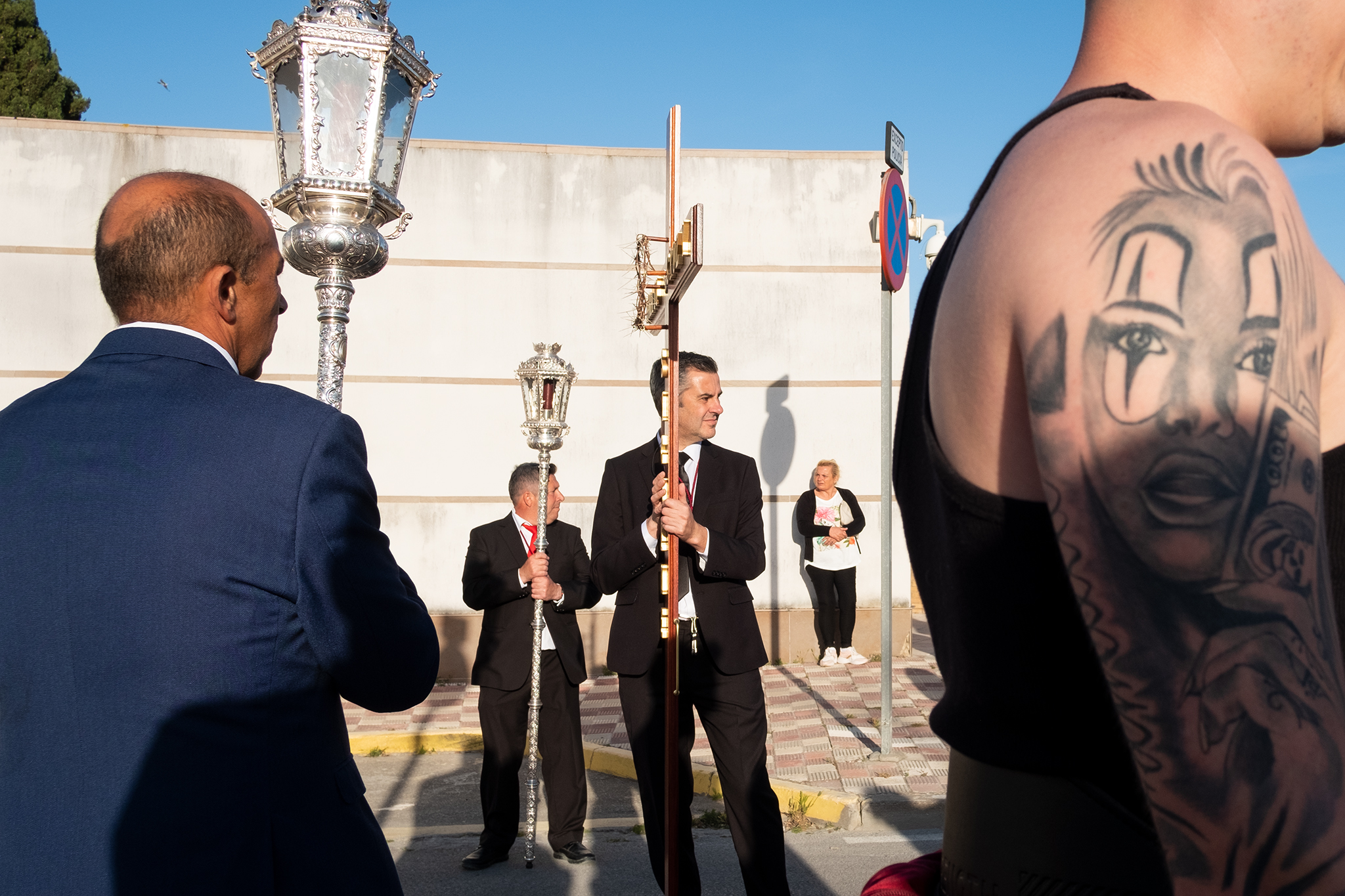
He reinforces this notion in the story behind his favorite street photo, which won the “Juror’s Picks” in the 2023 Lensculture Street Photography Awards:
Copyright ⓒ Alvaro Vegazo
“This is a photograph of Holy Week in my city, Sanlúcar de Barrameda. It has a documentary element, because it was taken during an event with a marked anthropological focus and could be part of a larger project. It also has a street photography element, because it exudes the atmosphere typical of this type of photography: layers, surrealism, message, etc.
At first, I was drawn to the tattoo in the foreground, so I started playing with the scene and including other elements, like the static woman in the background. With those two elements in the scene, all I had to do was play with the layers in between. And among the ones I was able to capture, the one that most caught my attention was the moment when there was a play and contrast between the gazes: the gaze in front of the tattoo, the men’s gaze to one side, and the woman’s gaze to the other, creating a visual balance and, at the same time, a potential metaphor. I was also drawn to the result and visual effect of the layers, because for me, one of the most complicated aspects of street photography is composing with layers.”
Copyright ⓒ Alvaro Vegazo
Reflecting on his decade-long photography practice so far, Vegazo describes the craft as an intellectual act that requires a high degree of concentration and connection with the environment. He even considers it as a meditative activity and exercise in mindfulness, encouraging him to live in the present to capture a fleeting moment.
“It’s true that at first, my photography was more recognizable through its use of light and shadow. But seeing the works of great photographers served as a source of inspiration for me to approach street photography differently, demonstrating greater versatility and allowing me to reflect in them the person I am today: a product of my own life experiences and psychology.”
Visit Alvaro Vegazo’s website and follow him on Instagram (@amvegazo) to see more of his street and documentary photography.

Leave a comment