
Written by: Michiel van Mens
Impressionism and Street Photography: A Shared Visual Language
When I found myself standing in front of Max Liebermann’s ‘Die Colomierstraße in Wannsee’ (1917), I noticed something that had never occurred to me before. I realized that the Impressionists had made light itself the subject of their paintings. At the same time, I discovered that light becomes visible only through its opposite: shadow and darkness. The paradox is that the more darkness an artist shows, the more intensely the viewer experiences the light.
This very characteristic, the use of daylight as part of the subject itself, is something I also recognize in the work of photographers such as William Eggleston, Helen Levitt, Fred Herzog, and Saul Leiter. Looking at their photographs through this lens, I began to notice aspects that had previously escaped me. More importantly, it helped me understand what makes their images so compelling. Once I can identify and describe these characteristics, I become less dependent on chance. I gain greater control over my own photographic process and acquire practical tools for improving my work. This led me to ask a simple question: what can a street photographer learn from artists such as Max Liebermann, ClaudeMonet, and Camille Pissarro? This article is a personal account of that exploration.
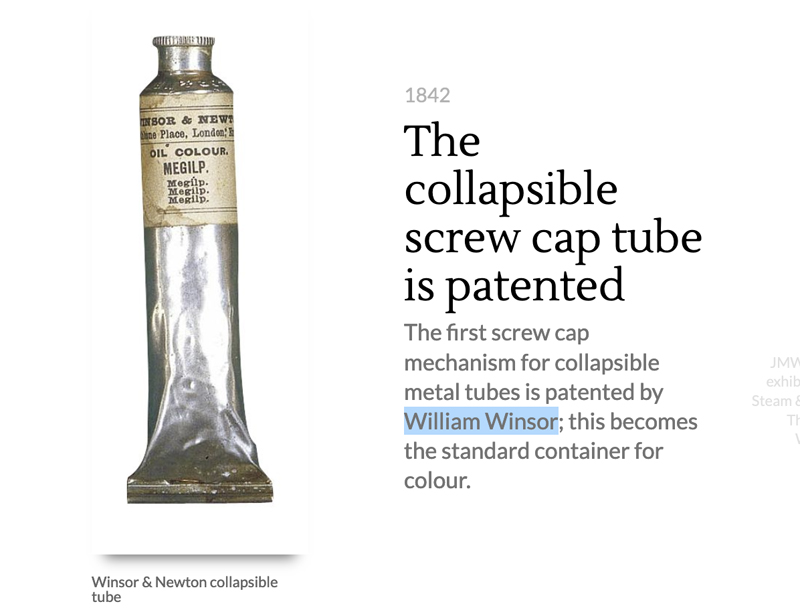
Innovation as a Driver of Change
In 1841, the American painter John Goffe Rand patented the collapsible paint tube. This technological innovation had a profound impact on the way artists worked and represented the world around them. Before its invention, painters typically mixed their own oil paints in the studio. Producing paint was a labor-intensive and essential part of the painter’scraft, and artists were limited by the pigments available to them.
The introduction of the paint tube also gave rise to a new industry. Companies such as Winsor & Newton in London and Lefranc & Bourgeois in France began manufacturing ready-made paints, taking over a significant part of the painter’s workload. Industrial production made a wider range of pigments available, resulting in an expanded palette of colors. Painters no longer had to spend hours preparing their materials and could devote more of their time and energy to painting itself. This seemingly simple invention changed not only the practical aspects of painting, but also the way artists engaged with the world. It enabled them to work outdoors, respond directly to changing light conditions, and capture fleeting moments. In many ways, it laid the foundation for one of the most influential artistic movements of the nineteenth century: Impressionism.
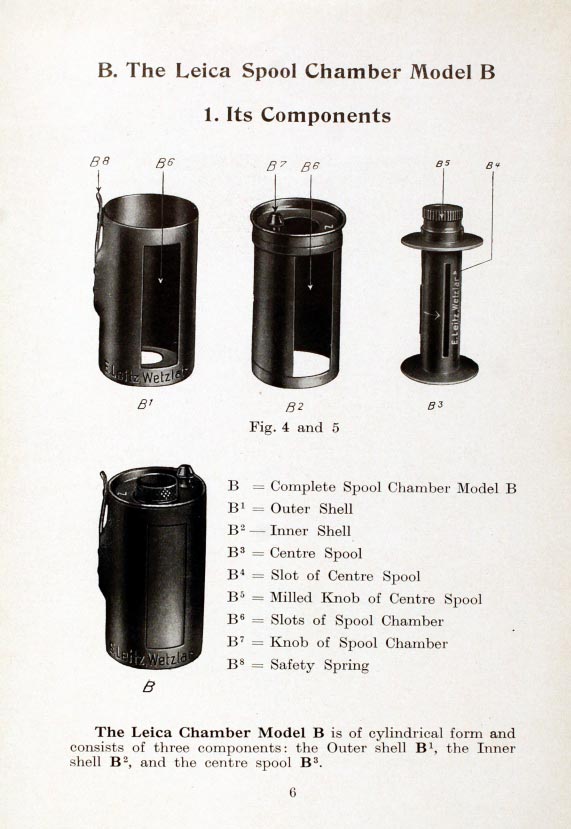
Photo 1 In 1924, Leitz introduced the reloadable film cassette
The reloadable filmcasette
The early history of photography can, in many ways, be compared to the way painters once made their own oil paints. Until the end of the nineteenth century, photographers often worked with the wet plate process. In this technique, a glass plate had to be coated with light-sensitive chemicals immediately before an exposure was made. As a result, photographers needed access to a darkroom close to the location where they were working.
Like mixing paint in the studio, photography was a time-consuming process that required considerable knowledge of chemistry, materials, and optics.
The introduction of ready-made dry glass plates—and later, celluloid film— had a transformative impact on photography comparable to that of the paint tube on painting. Photographers no longer had to prepare their own materials and could work much more freely outside the studio. As with the paint tube, this innovation gave rise to an entirely new industry, with companies producing ready-to-use photographic materials. A major breakthrough for professional photographers came in 1924, when Leitz introduced the reloadable film cassette together with the first practical 35mm camera. This combination made photography more portable, efficient, and accessible than ever before.
Mobility
One of the most important consequences of these technological innovations was mobility. The paint tube freed painters from the confines of their studios and allowed them to work outdoors. Likewise, the introduction of ready-made dry plates meant that photographers no longer depended on a nearby darkroom to prepare their materials.
The Impressionists formed a recognizable group of painters who were active between roughly 1860 and 1890, primarily in and around Paris. They knew one another, exchanged ideas, and exhibited their wor together. Their first independent exhibition took place in Paris from Apri 15 to May 15, 1874, and is generally regarded as the birth of Impressionism as an artistic movement
The first generation of street photographers followed a different path. Photographers such as Henri Cartier-Bresson, Helen Levitt, William Klein, Joel Meyerowitz, Garry Winogrand, Lee Friedlander, Saul Leiter, Fred Herzog, William Eggleston, and Vivian Maier did not form a cohesive group. Most worked independently, often in different countries andcultural contexts, and many had little or no contact with one another. They were not organized as a movement and did not share a common manifesto. Yet, viewed from a historical perspective, they can be seen as the pioneers of a new photographic genre: street photography. Like the Impressionists before them, they transformed the way everyday life wasrepresented. Their images demonstrated that ordinary streets, anonymous passersby, fleeting moments, and the rhythms of daily life could become worthy subjects of serious artistic attention. Although they never considered themselves a unified movement, their collective contribution laid the foundations for what we now recognize as street photography.
As a result, both painters and photographers left their workspaces and ventured into the world outside. They could now observe and record everyday life directly, rather than relying on sketches, memory, or carefully staged scenes.
This newfound freedom changed the way artists looked at the world.
Landscapes, city streets, parks, cafés, and ordinary people going about their daily lives became worthy subjects in their own right. Painters and photographers could respond to changing weather, shifting light, and fleeting moments as they happened. For the first time, both mediums were able to capture life with an immediacy that had previously been impossible. Mobility not only changed where artists worked; it also transformed what they chose to depict and how they represented the world around them.
Education
The paint tube not only gave rise to a new industry; it also helped make possible a new style of painting: Impressionism. Among its most prominent representatives were Max Liebermann in Germany and Claude Monet, Pierre-Auguste Renoir, Edgar Degas, and Camille Pissarro in France. Remarkably, many of these artists did not complete a formal academiceducation and consciously distanced themselves from the rigid rules of the art academies. Among the major Impressionists, Edgar Degas was the only one to complete his academic training. This does not mean that the otherslacked artistic instruction. Most attended classes, studied in private ateliers, or worked under established artists. However, they developed their distinctive styles largely outside the official academic system.
A similar pattern can be found in street photography. Many of the most influential street photographers were largely self-taught. The Dutch photographer Ed van der Elsken, for example, attended the School of Applied Arts in Amsterdam, later studied at an evening technical school, and subsequently enrolled in a correspondence course at the Dutch Schoolof Photography. He never obtained a diploma. Shortly thereafter, he moved to Paris, where he worked in Magnum’s photographic laboratory and learned from some of the most important photographers of his time.
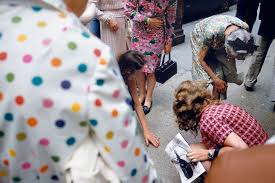
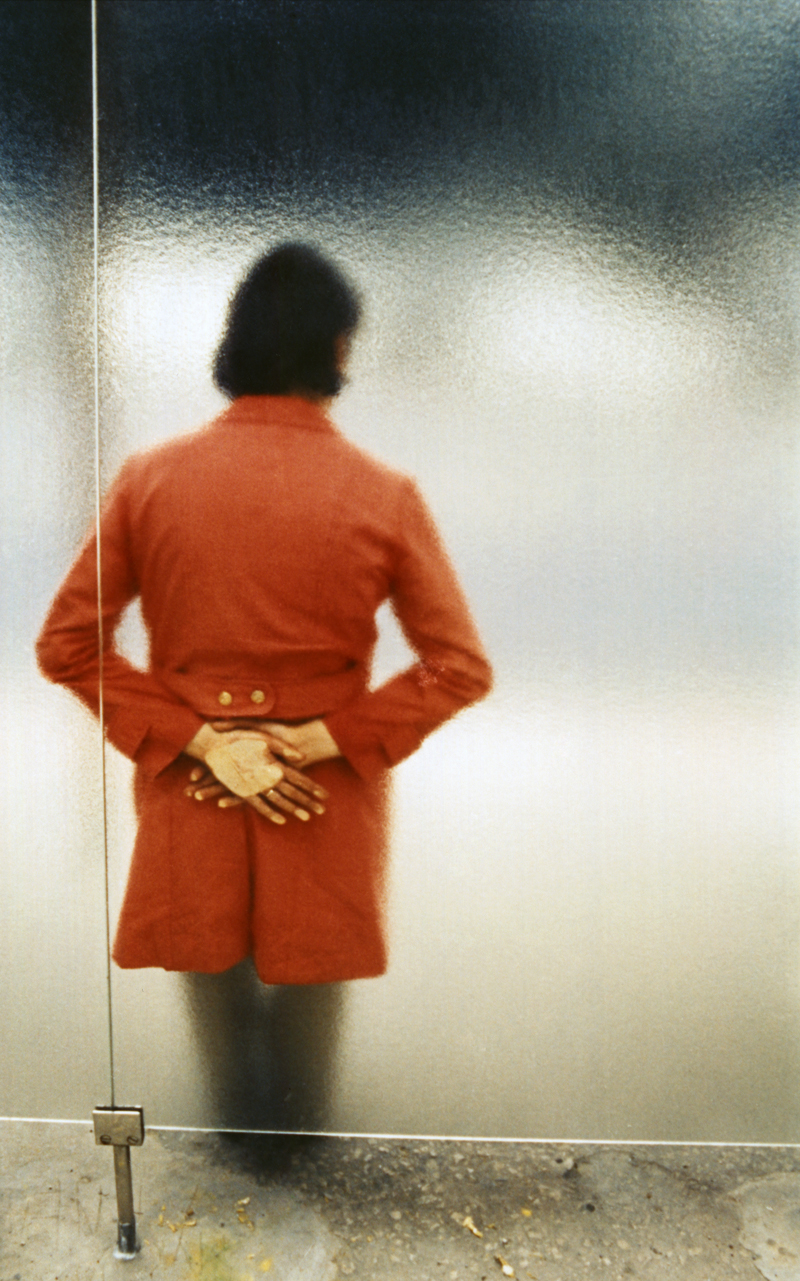
Copyright ⓒ Mitch Epstein,Madison Avenue, New York City 1973
In my research, ‘The Photographic Signature of the Street Photographer in Six Stylistic Characteristics’, I examined the work of fifteen renowned street photographers. Only two of them—Martin Parr and Philip-Lorca diCorcia— completed a formal education in photography. Others, including Henri Cartier-Bresson, Garry Winogrand, and William Klein, attended art schools, but not specifically to become photographers. Both Impressionism and street photography demonstrate that innovation often emerges outside traditional educational structures. The pioneers of both movements learned by observing, experimenting, and developing their own visual language.
Subject Matter
The Impressionists did more than paint outdoors (‘en plein air’); they also revolutionized the choice of subject matter. Instead of depicting historical events, mythological scenes, or portraits of the wealthy bourgeoisie, they turned their attention to everyday life. Streets, cafés, factories, theaters, parks, and the bustling modern city became their preferred subjects. Equally innovative was their style. Using loose, rapid brushstrokes, they sought to capture a fleeting moment, creating images that often feel like visual snapshots of life as it unfolded before them.
A similar development can be observed in the first generation of street photographers. They, too, searched for a new visual language and a new set of subjects. In the work of photographers such as Helen Levitt, Ernst Haas, Fred Herzog, and Luigi Ghirri, everyday street life takes center stage. They photographed children at play, cafés, parked cars, shop windows, neon signs, and countless other ordinary scenes.
In many respects, these themes closely resemble those explored by the Impressionists. Both movements found beauty and meaning in the familiar and the commonplace.
Perhaps no photographer pushed this idea further than Stephen Shore. For Shore, almost anything could become a worthy subject. He photographed hotel rooms, bathrooms, television sets, intersections, parking lots, and even meals he had just eaten. Through his lens, the ordinary became extraordinary, and everyday life became a legitimate artistic subject in its own right. Like the Impressionists before them, street photographers expanded the boundaries of what could be considered worthy of artistic attention. They showed that profound images can emerge not only from grand events, but also from the small, often overlooked moments of daily life.
Criticism
As is often the case, new artistic developments are rarely recognized immediately, and their significance is often understood only in hindsight. The Impressionists provide a perfect example.
The art critic Louis Leroy originally coined the term ‘Impressionist’ as a form of ridicule. Referring to artists such as Claude Monet, Edgar Degas, and Auguste Renoir, he used the label to suggest that their paintings were unfinished and amounted to nothing more than a fleeting impression of reality. What was intended as criticism, however, was embraced by the artists themselves. They adopted the term with pride, and what began as a dismissive nickname eventually became the name of one of the most influential movements in art history.
A similar pattern can be seen in the history of street photography. The work of many street photographers was initially dismissed or misunderstood. When William Eggleston was given a solo exhibition at the Museum of Modern Art (MoMA) in New York in 1976, many critics reacted with disbelief. Some described his photographs as mere “snapshots,” implying that they had been taken casually and without artistic intention.
Eggleston was far from alone in facing such criticism. Many photographers working in color or focusing on everyday life struggled to find exhibition opportunities. As a result, some organized their own slide shows and informal presentations to share their work with an audience. Looking back, much of this criticism seems misplaced. Eggleston’s photographs are no more accidental snapshots than Monet’s or Degas’s paintings were unfinished sketches. His images are carefully selected, thoughtfully composed, and meticulously constructed. Yet the comparison is revealing. Just as the term ‘Impressionist’ was initially intended as an insult, the label ‘snapshot’ was often used to diminish the work of street photographers. Over time, however, both terms became closely associated with important artistic movements. What critics once dismissed as careless or incomplete is now widely recognized as innovative, influential, and artistically significant.
Color
Until well into the nineteenth century, the colors available to painters were largely determined by the pigments they could obtain. Many of these raw materials were available only locally, which had a direct influence on the appearance of paintings. This helps explain why seventeenth-century Dutch paintings are often characterized by dark, earthy tones, while Italian painters such as Caravaggio had access to different pigments that allowed them to work with brighter and more vibrant colors.
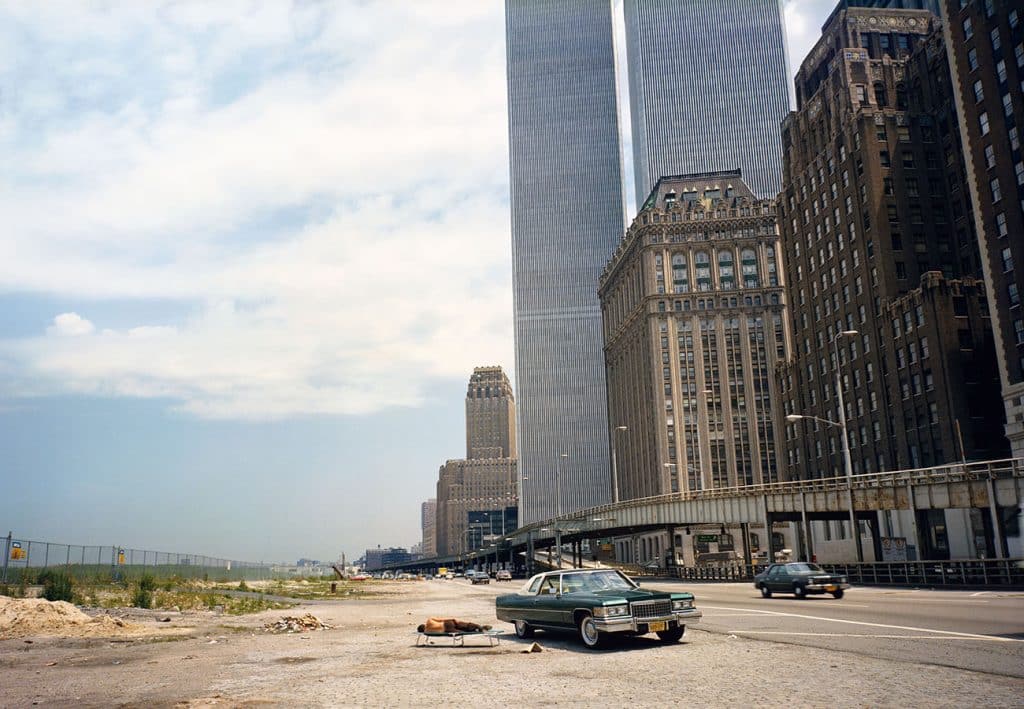
Copyright ⓒ Mitch Epstein, West Side Highway, New York City 1977
The invention of the paint tube, combined with the industrial production of artists’ materials, dramatically expanded the range of available pigments. Painters suddenly had access to a much broader palette of colors, and the Impressionists embraced these new possibilities enthusiastically.
One particularly striking example is their use of violet. Although this color appears only sparingly in nature, it became a recurring feature in many Impressionist paintings. Artists used violet not only as a color in its own right but also as a powerful tool for depicting light, atmosphere, and shadow. Rather than relying on black or dark brown tones, they often used subtle shades of violet to create depth and luminosity.
The Impressionists understood that color was not merely a way of describing the world; it was a means of interpreting it. Advances in technology had expanded their palette, and they used these new colors to develop an entirely new way of seeing and representing reality. An interesting parallel can be drawn between Impressionist painting and the rise of color photography. Photographers such as Helen Levitt, Saul Leiter, Mitch Epstein, William Eggleston, and Fred Herzog deliberately embraced color at a time when black-and-white photography was still considered the serious and artistic standard.
Among them, William Eggleston played a particularly important role. He experimented extensively with the ‘dye transfer’ process, a printing technique introduced by Eastman Kodak in 1946. This method produced photographs with exceptionally rich, deep, and highly saturated colors. The process, however, was expensive, time-consuming, and technically demanding, making it accessible to only a small number of photographers.
Just as new pigments and paint technologies transformed painting, advances in photographic technology changed the way color could be used and experienced in photography. These developments allowed photographers to move beyond merely recording reality and to use color as an expressive visual language.
The influence of these innovations can be seen in the vibrant color palettes of William Eggleston, Mitch Epstein, Saul Leiter, Ernst Haas and Fred Herzog. Later generations of photographers, including Vivian Maier, Martin Parr, and Philip-Lorca diCorcia, continued to explore the creative possibilities of color, each in their own distinctive way.
For these photographers, color was never simply a descriptive element. Like the Impressionists before them, they used it to shape mood, guide attention, and transform ordinary scenes into compelling visual experiences. Color became not just a way of representing the world, but a way of interpreting it.
Color vs. Black-and-White Photography
The use of color film was expensive and often controversial. Many influential street photographers continued to work primarily in black and white. In some cases, this may have had less to do with artistic preference than with practical considerations. Newspapers and magazines were largely printed in black and white, and photographers often depended on these publications for their income. As the saying goes, those who pay the bills often determine the rules.
Photographers who worked more independently, however, were free to make different choices. William Eggleston, Helen Levitt, Joel Meyerowitz, Saul Leiter, and Fred Herzog consciously embraced color photography and explored its creative possibilities long before it gained widespread acceptance in the art world.
Here we find another striking parallel with the Impressionists. Just as many academic painters resisted the innovations of Impressionism, the photographic establishment was often skeptical of color photography. Black-and-white photography was regarded as the only serious artistic medium, while color was associated with advertising, magazines, postcards, and other commercial applications.
Copyright ⓒ Eredi di Luigi Ghirri, Brest, 1972
As a result, photographers who chose to work in color frequently encountered criticism and misunderstanding. Their work was often dismissed as less sophisticated, less artistic, or less important than black- and-white photography.
History, however, tells a different story. Just as the Impressionists eventually transformed the way people viewed painting, photographers such as Eggleston, Leiter, Levitt, and Herzog changed the way color was understood in photography. What was once considered unsuitable for serious artistic expression became one of the defining visual languages of modern photography.
In both cases, artists challenged established conventions and demonstrated that new technologies and new ways of seeing could open entirely new possibilities for artistic expression.
Contrast and Light
Light is the essence of both painting and photography. Without light, there is no image. Yet there is an important distinction in how artists approach it. Is light merely a tool used to depict a subject, or does light itself become the subject? For the Impressionists, the latter was often the case. The representation of light became an essential part of what the painting was about.
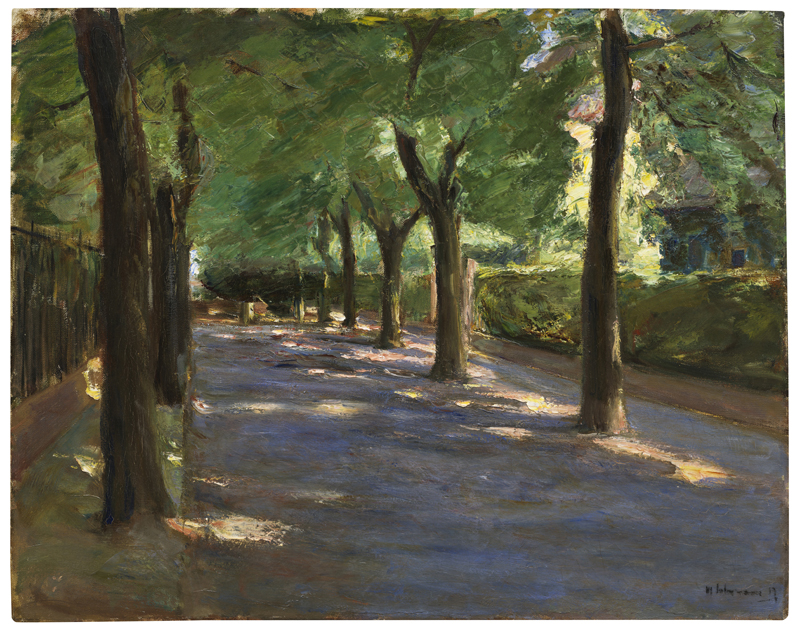
Copyright ⓒ Max Liebermann Die Colomierstraße in Wannsee 1917
A striking example is ‘Die Colomierstraße in Wannsee’ (1917) by the German Impressionist Max Liebermann. At first glance, the painting depicts a simple country road lined with trees and high hedges. Most of the canvas is rendered in dark earth tones and shades of green. Only in the final stage does Liebermann add a few light brushstrokes of white and yellow, suggesting sunlight filtering through the leaves. These seemingly simple touches transform the scene. The viewer’s eye is immediately drawn to the light, turning an ordinary road into something poetic and memorable. In this painting, the trees and the road are not the true subject. The real subject is the dancing sunlight shimmering through the foliage and falling onto the ground.
Paradoxically, light becomes visible only because of shadow. To make light stand out, large parts of a painting—or a photograph—often need to remain in darkness. The contrast between light and shadow gives light its presence, its atmosphere, and its emotional power.
The same fascination with light and contrast can be found in the work of the first generation of color street photographers. Photographers such as Helen Levitt, Mitch Epstein, Saul Leiter, William Eggleston, and Fred Herzog used color, shadow, and light not merely to record a scene, but to create mood and evoke emotion. Like the Impressionists before them, they understood that sunlight itself could become part of the subject. A particular quality of light could transform an ordinary street corner into a compelling visual experience.
Later photographers, including Stephen Shore, Ed van der Elsken, Philip- Lorca diCorcia and Alex Webb, continued to build on this approach. In their work, light often plays a leading role. Like the Impressionists, they discovered that even the most ordinary subject can become extraordinary when illuminated by extraordinary light. For both painters and photographers, light is more than a technical necessity. It is a creative force that shapes the way we see, feel, and interpret the world around us.
The Similarities
Both movements emerged from technological innovation. The Impressionists were enabled by the invention of the paint tube and the industrial production of pigments, while street photography benefited from advances in photographic materials and the introduction of portable cameras. It is fascinating to realize that much of the criticism directed at these innovations was, in the end, little more than opinion. What was once dismissed as inferior or unimportant is now widely regarded as groundbreaking.
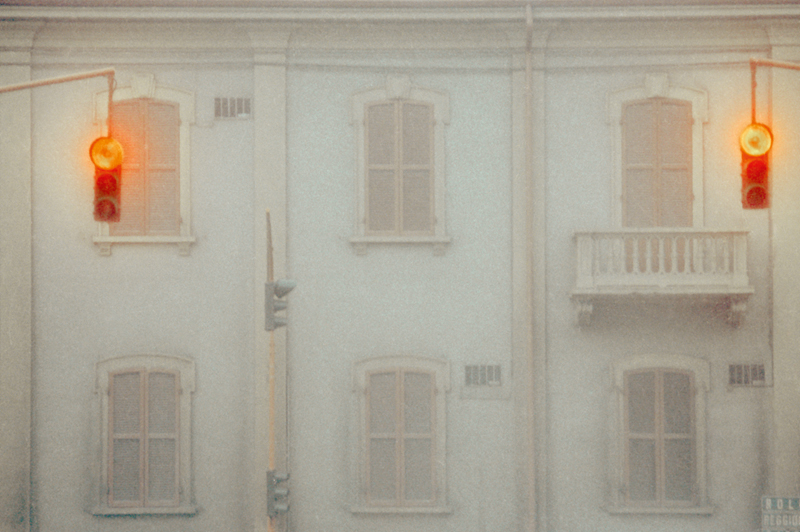
Copyright ⓒ Eredi di Luigi Ghirri, Reggio E, milia, 1973
It is equally striking that many of the pioneers of both movements lacked a formal academic education. This may not be a coincidence. Developing an individual style, a personal vision, and a distinctive artistic voice often requires a willingness to move beyond established conventions and accepted rules.
The Impressionists and the first generation of street photographers shared several important characteristics. Among them were their choice of subject matter and their use of light, color, and contrast. Both groups were interested not simply in recording everyday scenes, but in capturing the atmosphere of a particular moment. The quality of light itself became part of the subject. For the Impressionists, the expanding range of available pigments opened up entirely new possibilities. They experimented extensively with color, creating paintings filled with rich and expressive hues. These colors were not necessarily intended to reproduce reality accurately. Instead, they were used to convey mood, sensation, and the artist’s personal perception of the scene.
The same can be said of the first generation of color street photographers. Their use of color was rarely objective or strictly realistic. It was shaped by the photographic technologies available at the time and by their desire to communicate a particular atmosphere. Like the Impressionists, they discovered that color could be used not merely to describe the world, but to interpret it.
In both movements, technology provided new tools, but it was the artists themselves who transformed those tools into a new visual language. Their work reminds us that innovation in art often arises when creators embrace new possibilities and use them to see familiar subjects in unfamiliar ways.
Today
As a contemporary street photographer, you are, in a sense, a colorist of everyday life. Through the deliberate use of color—or a limited palette of colors—you shape the way viewers experience a scene. Street photography is not only about photographing people and events; it is also about photographing light in public space.
Light becomes visible through shadow. Large dark areas can strengthen an image and draw attention to the light within it. The goal is not necessarily to create a perfectly faithful representation of reality. Our perception of color is influenced not only by fashion and cultural taste, but also by the technology of a particular era.
Everyone recognizes the distinctive colors of Polaroid photographs from the 1970s. Today, those colors immediately evoke a specific time and place. This raises an interesting question: how “realistic” is the color rendering of an iPhone? Perhaps twenty years from now, people will look at today’s smartphone images and say, “That’s so typical of the 2020s.”
Like the Impressionists, street photographers can use post-processing to enhance the expressive power of an image. Light can be strengthened by increasing contrast, brightening certain areas, or deepening shadows in others. And just as the Impressionists experimented with newly available pigments, photographers can use filters, color grading, and other digital tools to emphasize particular colors and create a specific mood.
What fascinates me most is the profound influence of technology on art. Throughout history, technological innovations have played a crucial role in the development of new visual languages. Artists who embrace new technologies are often criticized by the established authorities of their time. Perhaps this is because expertise is easier to maintain when nothing changes.
Whether we are talking about computers, software, algorithms, or artificial intelligence, new technologies provide artists with new ways of expressing themselves. The same was true for the paint tube, and ‘ready-made dry plates’. Each innovation expanded the creative possibilities available to artists and challenged existing ideas about what art could be.
Whether you are a photographer, painter, sculptor, composer, or poet, it is far more interesting to explore and experiment with these developments than to reject them simply because they are new. History repeatedly shows that artistic progress often begins where curiosity meets technology.
Perhaps artists such as Phil Toledano, through projects like Edward Trevor: Never Seen the Light, are defining what the next generation of street photography might look like.
About the Author
Michiel van Mens has been active in the field of street photography for more than thirty years. His guiding belief has always been simple: if you want to improve as a photographer, study the very best. This led him to ask a fundamental question: what makes photographers such as Ed van der Elsken and Henri Cartier-Bresson so exceptional?
To find an answer, he undertook a two-year research project in which he analyzed hundreds of monographs by renowned street photographers. His findings suggest that a photographer’s visual signature can be understood through six categories of stylistic characteristics. The work of the most influential street photographers stands out because they introduce something new within one or more of these characteristics, thereby expanding the visual language of the genre.
This research resulted in the book ‘The Photographic Signature of the Street Photographer in Six Stylistic Characteristics’ as well as several articles that have been published internationally.
Articles
The Photographic Signature of the Street Photographer in Six Stylistic Characteristics.
This article is based on my research into the visual signature of street photographers. The study identified six stylistic characteristics that provide insight into how street photographers construct and shape their images.
These characteristics can be found, to a greater or lesser degree, in the work of every major street photographer.
The “Good” Photographs of American Photography
This article explores a fundamental question: ‘What makes a good street photograph?’ The analysis is based on Nan Goldin’s definition of photography and a quantitative study of visitor data from the Rijksmuseum. One of the key conclusions is that visual opposition or contrast is an essential ingredient of a strong street photograph.
Suggestion! No Answers, Please
In this article, I revisit the question: What makes a good street photograph? Based on a qualitative analysis, I argue that suggestion plays a crucial role. Images that leave room for interpretation are often more powerful than photographs that explain everything explicitly. For street photographers, this means that it is often better to avoid images that are overly clear, literal, or fully resolved.
Our Thanks & Gratitude to both Mitch Epstein and Luigi Ghirri to have kindly granted permission to reproduce their photographs in the article
Finaly With Thanks & Gratitude To Michiel Van Mens. To see and learn More, visit his Street Photography and Follow him on Instagram

Leave a comment